But here's the problem. With hundreds of certifications competing for attention, professionals waste months trying to figure out which ones actually move the needle on salary and job security versus which ones just look good on paper.
This guide ranks the top-paying IT certifications for 2026, breaks down what it actually takes to earn each one, and shows beginners a realistic path toward them.
TL;DR
- The highest-paying IT certifications in 2026 cluster around cloud architecture, cybersecurity leadership, and risk/privacy governance
- Most six-figure certifications require 3-5+ years of hands-on experience — beginners need a foundational credential first
- Choose certifications based on career alignment and demand, not name recognition alone
- Building that foundation starts with entry-level, industry-recognized credentials in core skills like web development, backend systems, or AI — the kind COITB offers — before pursuing advanced, higher-paying specializations
Why IT Certifications Command Higher Salaries in 2026
Certifications work because they solve a hiring problem. Employers can't verify skill claims on a résumé, but they can trust a third-party exam. That reduces hiring risk, speeds up interviews, and often triggers raises or promotions for existing staff who earn one.
The pay bump is real, though smaller than certification vendors like to advertise. According to the Dice Tech Salary Report, certified U.S. tech professionals averaged $113,577 versus $111,359 for non-certified peers — a modest 2% difference across all certifications combined. The bigger money is concentrated in specific, high-demand credentials, not certification-holding in general.
That demand isn't evenly spread. It's concentrated in a handful of domains:
- Cloud computing — enterprise migration to AWS, Google Cloud, and Azure keeps accelerating
- Cybersecurity — persistent talent shortages across every industry
- Data privacy and governance — tightening regulation worldwide
- AI implementation — new roles emerging faster than talent pipelines can fill them, particularly for developers who can apply AI tools like GPT to real application-development work
The scale of the security gap alone explains a lot of the salary premium. ISC2's 2024 Cybersecurity Workforce Study estimated a global unfilled workforce need of roughly 4.8 million professionals — nearly 47% of the existing cybersecurity workforce. When supply is that far behind demand, certified specialists get paid accordingly.
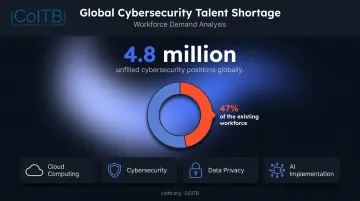
These demand gaps explain the pay premiums that follow. The rankings below sort certifications by average reported salary and explain exactly what each one validates.
Top Paying IT Certifications in 2026
These rankings look at where entry-level IT certifications translate into the strongest early-career salary jumps, based on demand signals across web development, backend engineering, and AI application roles — not marketing copy from certification vendors.
ReactJS Framework Developer Certification
This credential validates hands-on ability to build component-based user interfaces with React: state management, hooks, routing, and integration with backend APIs. It's designed for candidates with 0-6 months of hands-on experience, not just classroom exposure.
React remains one of the most requested front-end skills in job postings, which keeps certified developers competitive even early in their careers.
| Metric | Detail |
|---|---|
| Format | 58-90 multiple-choice and scenario-based items, 75-90 minutes |
| Passing Score | 70-75% |
| Experience Target | 0-6 months hands-on React experience |
HTML-CSS Web Designer Certification
This certification proves core front-end fundamentals: semantic HTML, responsive CSS layouts, and cross-browser design principles. Typical candidates include career changers, bootcamp graduates, and freelance web designers building a portfolio.
Why it stands out: it's the most common entry point into web development, giving self-taught developers a recognized credential to pair with project work.
| Metric | Detail |
|---|---|
| Format | 58-90 multiple-choice and scenario-based items, 75-90 minutes |
| Passing Score | 70-75% |
| Experience Target | 0-6 months hands-on HTML/CSS experience |
Professional Python Developer Certification
This credential validates practical Python skills: data structures, scripting, and application logic used across backend and automation roles. It suits career changers moving from non-tech fields as well as self-taught developers.
Why it stands out: Python's use across data, automation, and AI tooling keeps demand steady well beyond web development alone.
| Metric | Detail |
|---|---|
| Format | 58-90 multiple-choice and scenario-based items, 75-90 minutes |
| Passing Score | 70-75% |
| Experience Target | 0-6 months hands-on Python experience |
Certified GPT Professional
This certification validates practical skills in applying generative AI tools: prompt design, workflow integration, and responsible use of GPT-based systems in business contexts. It's built for professionals adding AI fluency to an existing technical or business background.
Why it stands out: demand for AI-literate professionals is growing faster than most other tech skill categories, making this a strong complement to a developer or sales credential.
| Metric | Detail |
|---|---|
| Format | 58-90 multiple-choice and scenario-based items, 75-90 minutes |
| Passing Score | 70-75% |
| Experience Target | 0-6 months hands-on GPT/AI tool experience |
MySQL Backend Developer Certification
This credential validates backend database skills: schema design, queries, and data integrity practices used in real application development. It pairs naturally with front-end credentials like ReactJS for candidates aiming at full-stack roles.
| Metric | Detail |
|---|---|
| Format | 58-90 multiple-choice and scenario-based items, 75-90 minutes |
| Passing Score | 70-75% |
| Experience Target | 0-6 months hands-on MySQL experience |
Technical Sales Specialist Certification
This certification validates the ability to translate technical product capabilities into sales conversations, useful for career changers moving from non-tech sales into SaaS sales engineering. It also suits veterans with communications or signals backgrounds transitioning into technical sales roles.
| Metric | Detail |
|---|---|
| Format | 58-90 multiple-choice and scenario-based items, 75-90 minutes |
| Passing Score | 70-75% |
| Experience Target | 0-6 months hands-on technical sales experience |
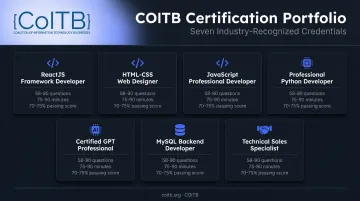
COITB offers these seven credentials through online proctored exams or authorized test centers, with military CAC and VA-issued ID accepted for eligible veterans and service members. Project managers who already hold PMP, PSM, or CSM credentials can stack any of these technical certifications to pivot toward technical PM or engineering manager roles.
How These Rankings Were Determined
These figures come from large-scale salary surveys, primarily Skillsoft's IT Skills and Salary Survey, combined with certification vendor data on prerequisites and fees. They're not pulled from marketing pages.
A common mistake: chasing a "high-paying" certification without checking whether you actually meet its prerequisites. A credential advertising a six-figure average salary means nothing if you don't have the years of hands-on experience required just to sit the exam.
That mismatch is avoidable. Before enrolling in any certification, weigh:
- Experience requirements — can you meet them now, or in the near term?
- Renewal and CEU obligations — most advanced certs require ongoing continuing education
- Industry-specific demand — a credential valuable at one type of employer may matter less at another
- Real ROI — salary data alone doesn't guarantee return if the exam is currently out of reach
From Beginner to High Earner: Building Your Certification Roadmap
Notice a pattern in the table above? Nearly every certification requires 3 to 5+ years of hands-on IT experience. That's not a typo, and it's not a barrier you can shortcut your way around.
If you're a beginner or career changer, the realistic starting point isn't CISSP or AWS Professional. It's a foundational credential that proves you can actually do the work employers need done right now — building interfaces, writing application logic, managing backend data, or working with AI tools.
COITB, a non-profit credentialing body, offers seven certifications aligned with ISO/IEC 17024 standards, built specifically for candidates with 0-6 months of hands-on experience:
| Technology | Certification |
|---|---|
| HTML + CSS | HTML-CSS Web Designer Certification |
| JavaScript | JavaScript Professional Developer Certification |
| React | ReactJS Framework Developer Certification |
| Python | Professional Python Developer Certification |
| MySQL | MySQL Backend Developer Certification |
| GPT/AI | Certified GPT Professional Certification |
| Technical Sales | Technical Sales Specialist Certification |
These credentials target bootcamp graduates, self-taught developers, and career changers specifically. Bootcamp training and self-study both count as qualifying experience sources.
Exams run 58-90 questions over 75-90 minutes, with passing scores between 70-75%. Each one issues a verifiable digital badge on completion that displays on LinkedIn and résumés.
One important clarification: if you're a PMP, PSM, or CSM holder looking to pivot into a technical PM or engineering manager role, COITB certifications complement your existing PM credential. They don't replace it. Layering a technical credential on top of proven project leadership is what signals readiness for hybrid roles.
That same logic applies whether you're stacking credentials or starting fresh — the exam process has to fit around a job you likely can't quit yet. For career changers balancing a current job, remote proctored testing removes the biggest logistical hurdle. Exams are available 24/7 from any private space with a webcam and standard internet connection — no need to take time off or travel to a test center, though authorized in-person centers exist nationwide for those who prefer them.
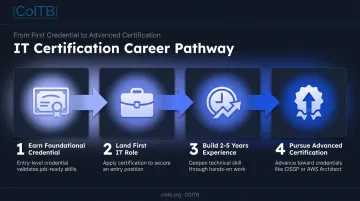
The realistic sequence looks like this:
- Earn a foundational credential (HTML-CSS, JavaScript, React, Python, MySQL, or GPT) to validate core skills
- Land your first IT role using that credential as résumé proof
- Build 2-5 years of hands-on experience in cloud, security, or development
- Pursue an advanced certification like CISSP, AWS Architect, or CISM once you meet the prerequisites
Conclusion
The highest-paying IT certifications in 2026 all reward the same thing: proven, hands-on expertise in cloud, security, and governance. But that expertise has to start somewhere. Skipping straight to CISSP without the underlying experience just wastes an exam fee.
Map your certification roadmap against where you actually stand today, not where you want to be in five years. If you're just getting started, validate your foundational skills first.
COITB's industry-recognized certifications offer a credible, verifiable way to validate those foundational skills. Built for candidates with 0-6 months of experience in application development and AI, they give career changers, bootcamp grads, and self-taught developers the proof of competency employers look for before advancing toward specialized, higher-paying credentials down the road.
Frequently Asked Questions
What is the highest paying IT certification?
Advanced cloud architecture and cybersecurity credentials report the highest average salaries, often exceeding $200,000, but they typically require 2-5 years of specialized experience. Building toward that level starts with validating core skills, such as the application development and AI credentials COITB offers.
What is the best IT certification to have?
"Best" depends entirely on your career stage. Beginners and career changers benefit most from foundational credentials like COITB's ReactJS, Python, or Certified GPT Professional certifications, which validate job-ready skills without years of prerequisite experience. Experienced professionals typically pursue advanced, specialty-level credentials once they've built a track record.
What is the highest paying IT skill?
AI/GPT development, cloud architecture, and cybersecurity consistently top salary surveys. Demand outpaces supply in all three areas, which keeps compensation elevated for professionals who can prove their skills.
Which is the toughest IT certification?
Advanced specialty credentials with strict experience prerequisites are widely considered the toughest, since they combine rigorous, scenario-based exams with broad technical domain coverage. Entry to mid-level exams, like COITB's, use a similar scenario-based format but focus on skills achievable within 0-6 months of hands-on practice.
How long does it take to earn a high-paying IT certification?
Entry-level certifications can take a few weeks of preparation. Advanced, specialty-level credentials require years of prior hands-on experience plus several months of dedicated exam study.
Can beginners work toward high-paying IT certifications without experience?
Not directly. Beginners should start with foundational, entry-level certifications to build verifiable skills and work experience before attempting advanced, high-paying credentials that require 3-5+ years in the field.