Introduction
IT is one of the most accessible career fields in America right now. You don't need a four-year degree, and in many cases, you don't need prior experience. The right credential is often all it takes to prove you're ready to work.
The problem? The certification landscape is genuinely overwhelming. Dozens of vendors offer credentials across IT support, cloud, networking, and software development — and it's easy to spend months chasing the wrong one for the wrong career track.
According to the BLS, computer and information technology occupations generate roughly 317,700 job openings annually, with an $105,990 median wage. That's a large, well-paying market — but only if you enter it from the right direction.
This guide covers the best IT certifications for beginners in 2026 across two distinct paths: traditional IT support and infrastructure, and modern software, web development, and AI roles.
Key Takeaways
- Certifications act as third-party proof of skill — critical when you lack years of work history
- For IT support and infrastructure roles: vendor-neutral certifications validating hardware, networking, and security fundamentals are the standard starting point
- For cloud and networking roles: cloud platform credentials and networking certifications dominate hiring requirements at the entry level
- For software, web dev, and AI careers: credentials in JavaScript, React, Python, or GPT are more direct than hardware-focused alternatives
- Match your certification to your target career track, not just name recognition
Why IT Certifications Matter for Beginners in 2026
Hiring managers don't know you yet. Your résumé can claim any skill — but a credential from a recognized body confirms it.
That matters more for beginners than anyone. ISC2's 2025 survey of 929 cybersecurity hiring managers found that 89% would consider entry-level applicants with only a certification, versus 81% who would consider applicants with only relevant education. Certifications outperformed degrees as a hiring signal.
That advantage applies across every beginner profile:
- Career changers — who have no IT work history to point to
- Bootcamp graduates — whose training programs aren't independently verifiable to employers
- Self-taught learners — who have the skills but no credential to validate them
- Veterans — translating service experience into civilian tech roles
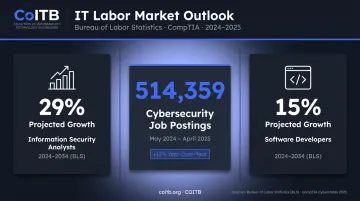
The BLS projects 29% growth for information security analysts and 15% growth for software developers through 2034. Cybersecurity job postings alone hit 514,359 from May 2024 through April 2025 — up 12% year-over-year. The opportunities are there — the right certification is what connects your skills to them.
Best IT Certifications for Beginners in 2026
The certifications below were selected based on four factors:
- Employer demand — skills that hiring managers actively look for
- Accessibility — designed for true beginners with little to no prior experience
- Cost-to-value ratio — affordable entry points with strong career ROI
- Career pathway clarity — each credential opens a defined next step
They're organized by career track.
HTML-CSS Web Designer Certification — Web Design & Front-End Track
The HTML-CSS Web Designer certification validates foundational skills in the two languages that structure and style every website on the internet. It's built for true beginners — no prior coding experience required — and covers semantic HTML, CSS layout, responsive design, and styling fundamentals that employers expect from any web-facing role.
Freelancers, career changers, and bootcamp graduates use this credential to demonstrate third-party validation of skills built through self-study or short programs.
| Detail | Info |
|---|---|
| Format | 58–90 multiple-choice and scenario-based questions, 75–90 minutes |
| Passing Score | 70–75% |
| Prerequisites | None; designed for 0–6 months experience |
| Delivery | Online proctored (webcam + stable internet) or authorized COITB test center |
| Target Jobs | Junior web designer, front-end developer, freelance web designer |
| Leads To | JavaScript Professional Developer, ReactJS Framework Developer |
ReactJS Framework Developer Certification — Front-End Development Track
ReactJS is the most widely used JavaScript library for building user interfaces, powering products at Meta, Airbnb, Netflix, and thousands of SaaS companies. The ReactJS Framework Developer certification validates component-based architecture, state management, props, hooks, and real-world application structure.
This is the credential self-taught developers and bootcamp graduates most often pursue to back up portfolio projects with a recognized third-party credential.
| Detail | Info |
|---|---|
| Format | 58–90 multiple-choice and scenario-based questions, 75–90 minutes |
| Passing Score | 70–75% |
| Prerequisites | None formal; working knowledge of JavaScript recommended |
| Delivery | Online proctored or authorized COITB test center |
| Target Jobs | Junior React developer, front-end developer, UI engineer |
| Leads To | JavaScript Professional Developer (if not already held), full-stack roles |
JavaScript Professional Developer Certification — Front-End & Full-Stack Track
JavaScript runs in every browser and powers the majority of modern web applications. The JavaScript Professional Developer certification covers core language fundamentals, DOM manipulation, asynchronous programming, and practical scripting — the skills that bridge static web design and dynamic application development.
It's a strong standalone credential and a natural step between HTML-CSS and React for anyone building a front-end career pathway.
| Detail | Info |
|---|---|
| Format | 58–90 multiple-choice and scenario-based questions, 75–90 minutes |
| Passing Score | 70–75% |
| Prerequisites | None formal; basic HTML/CSS familiarity helpful |
| Delivery | Online proctored or authorized COITB test center |
| Target Jobs | Front-end developer, web developer, junior software engineer |
| Leads To | ReactJS Framework Developer, full-stack development roles |
Professional Python Developer Certification — Back-End & Automation Track
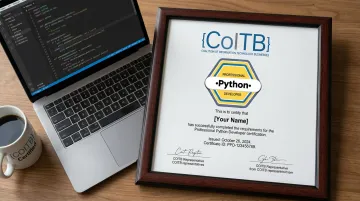
Python consistently ranks among the top two programming languages globally and is the primary language in data science, automation, scripting, and back-end web development. The Professional Python Developer certification validates syntax, data structures, functions, OOP principles, and practical scripting — skills directly applicable across multiple career tracks.
Career changers from finance, engineering, and business operations frequently use this credential to formalize self-taught Python skills built on freeCodeCamp, Udemy, or similar platforms.
| Detail | Info |
|---|---|
| Format | 58–90 multiple-choice and scenario-based questions, 75–90 minutes |
| Passing Score | 70–75% |
| Prerequisites | None; designed for 0–6 months experience |
| Delivery | Online proctored or authorized COITB test center |
| Target Jobs | Junior Python developer, automation engineer, back-end developer |
| Leads To | MySQL Backend Developer, data engineering or DevOps pathways |
MySQL Backend Developer Certification — Back-End & Data Track
Structured query language underpins virtually every application that stores or retrieves data. The MySQL Backend Developer certification validates database design, querying, table relationships, and data management — core competencies for back-end and full-stack roles that touch databases daily.
| Detail | Info |
|---|---|
| Format | 58–90 multiple-choice and scenario-based questions, 75–90 minutes |
| Passing Score | 70–75% |
| Prerequisites | None; back-end context from Python or JavaScript is helpful, not required |
| Delivery | Online proctored or authorized COITB test center |
| Target Jobs | Junior back-end developer, database administrator, full-stack developer |
| Leads To | Full-stack development, data engineering roles |
Certified GPT Professional — AI & Generative AI Track
Generative AI skills are now expected across product, operations, and technical roles. The Certified GPT Professional credential validates practical AI literacy — prompt engineering, GPT model application, workflow automation, and responsible use — for professionals integrating AI tools into real-world work.
Project managers, business analysts, and career changers from non-tech backgrounds frequently pursue this credential to add an in-demand technical layer to existing domain expertise.
| Detail | Info |
|---|---|
| Format | 58–90 multiple-choice and scenario-based questions, 75–90 minutes |
| Passing Score | 70–75% |
| Prerequisites | None; designed for non-technical professionals and AI newcomers |
| Delivery | Online proctored or authorized COITB test center |
| Target Jobs | AI specialist, prompt engineer, operations or product roles requiring AI fluency |
| Leads To | Technical program management, AI-adjacent development roles |
Technical Sales Specialist Certification — Sales Engineering & SaaS Sales Track
Technical sales roles — sales engineer, solutions consultant, pre-sales associate — sit at the intersection of product knowledge and client communication. The Technical Sales Specialist certification validates the technical fluency and consultative skills needed to demonstrate software products, handle objections, and support the sales cycle from a credible technical position.
Career changers from medical device, B2B, financial services, and telecom sales use this credential to make the pivot into SaaS sales or sales engineering concrete and verifiable.
| Detail | Info |
|---|---|
| Format | 58–90 multiple-choice and scenario-based questions, 75–90 minutes |
| Passing Score | 70–75% |
| Prerequisites | None; prior sales experience in any field is an asset |
| Delivery | Online proctored or authorized COITB test center |
| Target Jobs | Sales engineer, solutions consultant, technical account executive, pre-sales associate |
| Leads To | Senior sales engineering, technical program management |
Modern Certifications for Software Development, Web Design, and AI Beginners
Most beginner certification guides stop at infrastructure. That's a significant gap — software development, web development, and AI represent some of the fastest-growing career paths heading into 2026. BLS projects 15% growth for software developers and 29% growth for information security analysts through 2034, with generative AI engineering postings growing 7x since 2022 according to Lightcast data.
If your goal is building applications, designing user interfaces, or working with AI tools, hardware-focused credentials like CompTIA A+ aren't the most direct route.
What Employers Want in Modern Tech Roles
Employers hiring for front-end, full-stack, and AI roles consistently ask for:
- Front-end: HTML, CSS, JavaScript, React
- Back-end: Python, MySQL
- AI/automation: GPT integration, prompt engineering, API implementation
Certifications validating these specific skills are valuable — especially for candidates without CS degrees or traditional work histories.
Where COITB Fits In
COITB (College of IT and Business) is a non-profit credentialing body offering ISO/IEC 17024-aligned certifications in modern technology areas. Their seven credentials map directly to the skills employers ask for:
| Certification | Skills Covered |
|---|---|
| ReactJS Framework Developer | JSX, hooks, state management, React Router, API integration |
| HTML-CSS Web Designer | Semantic HTML5, Flexbox, CSS Grid, responsive design, accessibility |
| JavaScript Professional Developer | ES6+, async/await, DOM manipulation, Fetch API |
| Professional Python Developer | OOP, modules, automation, back-end fundamentals |
| MySQL Backend Developer | Schema design, SQL querying, indexes, stored procedures |
| Certified GPT Professional | Prompt engineering, API integration, responsible AI practices |
| Technical Sales Specialist | Solution selling, discovery frameworks, SaaS economics |
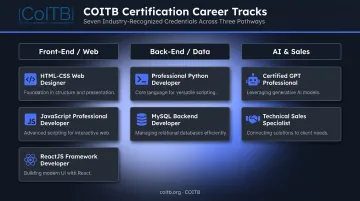
Exams run 58–90 questions over 75–90 minutes, with passing scores between 70–75%. All exams are available via remote online proctoring or in-person at authorized test centers.
Recommended Starting Sequences
The credential stack you choose depends on your target role:
- Front-end path: HTML-CSS Web Designer → JavaScript Professional Developer → ReactJS Framework Developer
- AI/back-end path: Professional Python Developer → Certified GPT Professional
Each sequence builds on the previous credential's skills — so by the time you sit for the final exam in the path, you're validating a connected, job-ready skill set rather than isolated concepts.
How to Choose the Right IT Certification for Your Goals
The most common mistake beginners make is choosing a certification based on name recognition rather than career fit. Here's a cleaner framework:
Match your target role first:
- Help desk / IT support → CompTIA Tech+ or A+
- Cybersecurity → CompTIA Security+
- Cloud engineering → AWS Cloud Practitioner
- Networking → CCNA
- Front-end / web development → HTML-CSS → JavaScript → ReactJS (COITB)
- AI / generative AI → Certified GPT Professional (COITB)
- Full-stack development → HTML-CSS → JavaScript → React → MySQL (COITB)
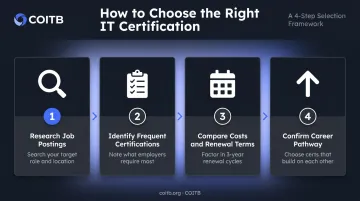
Before registering for anything:
- Search actual job postings in your target role and location
- Note which certifications appear most frequently in requirements
- Compare exam costs and renewal requirements (most CompTIA certs expire every 3 years)
- Confirm the certification has a clear upward pathway — not a dead end
That last point matters more than most beginners realize. Pick one certification, prepare thoroughly, pass it, then move to the next. Stacking credentials only pays off when each one builds on the last — otherwise you're collecting badges without a story employers can follow.
Frequently Asked Questions
Is CompTIA A+ for beginners?
Yes. CompTIA A+ has no formal prerequisites, though CompTIA recommends 12 months of hands-on experience. Many candidates with no prior background pass after consistent self-study — the two-exam structure just requires more preparation time than single-exam credentials.
What IT certification should I get first with no experience?
For traditional IT careers, CompTIA Tech+ is the most beginner-friendly starting point — no prerequisites, covers foundational concepts, and costs less than A+. For software or web development careers, start with an HTML-CSS or introductory JavaScript certification instead.
How long does it take to get an entry-level IT certification?
Preparation time varies. Most beginners studying consistently can prepare for CompTIA Tech+ or AWS Cloud Practitioner in 4–12 weeks. More demanding credentials like CompTIA A+ or CCNA typically require 3–6 months of dedicated study.
Can I get an IT job with just a certification and no degree?
Yes — hiring managers in IT support, networking, cloud, and development regularly hire certified candidates without degrees. Portfolio work and practical projects alongside your credential strengthen your candidacy further.
Do IT certifications expire?
Most do. CompTIA certifications are valid for 3 years and can be renewed through continuing education or re-examination. AWS certifications also require renewal. Factor renewal costs and timelines into your long-term planning.
What is the easiest IT certification to get for a complete beginner?
CompTIA Tech+ is one of the most accessible options for absolute beginners in traditional IT — single exam, no prerequisites, foundational scope. For software-focused beginners, COITB's HTML-CSS Web Designer certification is designed for candidates with 0–6 months of hands-on practice.
Your starting certification should match your target career path. Traditional infrastructure roles and modern software/AI tracks each have strong, in-demand entry points — the decision comes down to where you want to land.
If you're heading toward software development, web design, or AI, explore COITB's ISO/IEC 17024-aligned certification programs — covering JavaScript, Python, React, MySQL, HTML/CSS, and GPT — with flexible online testing designed for self-taught learners, bootcamp graduates, career changers, and veterans. Visit coitb.org or reach out directly at support@coitb.org to learn more.