That confusion is the actual problem. Many newcomers can't tell a certification from a certificate, or figure out which credential moves the needle with a hiring manager versus which one just looks nice on a resume.
This guide breaks down the top web design certifications and courses available right now, how to pick the one that fits your goals, and what kind of career payoff you can realistically expect.
Key Takeaways
- Certifications require passing a third-party exam; certificates only confirm coursework completion.
- Strong programs combine hands-on projects with HTML, CSS, JavaScript, React, and AI-assisted workflows
- A credential paired with a real portfolio outweighs either alone.
- Beginners, career changers, and self-taught developers gain the most from credentialing.
- Base your certification choice on experience level, budget, and target job listings.
Web Design Certification vs. Certificate: What's the Difference?
These two words get used interchangeably, but they mean different things.
A certificate confirms you completed coursework. A certification confirms you passed an independent, standardized exam. The difference comes down to who's vouching for your skills:
| Category | Certificate | Certification |
|---|---|---|
| Issued by | School or training provider | Third-party credentialing body |
| What it proves | Attendance and effort | Verified, tested competency |
| Exam required | Not always | Yes, standardized and proctored |
| Administered by | Same organization that taught you | Independent organization |
That distinction matters more than most people realize.
Certifications aligned to recognized frameworks like ISO/IEC 17024 are generally viewed as more rigorous. This standard sets requirements for organizations that certify individuals, meaning the credential tests competence directly rather than just confirming you showed up to class. COITB's own credentials, including its ReactJS Framework Developer and HTML-CSS Web Designer certifications, are built to this standard, testing real skills through proctored exams rather than confirming course attendance.
Here's the catch: most "web developer certifications" on the market today are technically certificates. There's no single universal governing body for web design the way project management has with PMP.
That's starting to change. Credentialing organizations built specifically to fill this gap now test HTML, CSS, JavaScript, and React skills through proctored exams rather than course completion.
Why Pursue a Web Design Certification or Course?
You don't need a four-year degree to build a career in web design. Career changers and self-taught learners use certifications to validate real, job-ready skills without committing years and tens of thousands of dollars to a traditional program.
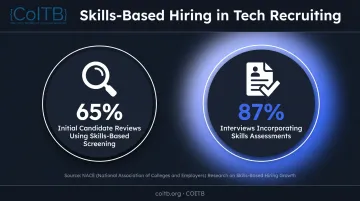
There's also a practical hiring reality at play. According to NACE's report on skills-based hiring, employers now apply skills-based screening during 65% of initial candidate reviews and 87% of interviews. A credential gives recruiters something concrete to check when they're moving fast through a stack of applications.
Certifications solve a second problem: keeping pace with a field that changes constantly. A few years ago, "web developer" mostly meant HTML and CSS. Today's certification exams test:
- React and component-based front-end architecture
- JavaScript frameworks beyond the basics
- Responsive, accessibility-compliant design
- AI-assisted development and prompt-based workflows
Current certification exams reflect these shifts directly, so you know exactly which skills employers expect instead of guessing what's relevant.
Top Web Design Certifications and Courses to Consider
This list mixes foundational, specialized, and advanced options, helping you match a program to your actual skill level rather than the level a marketing page assumes you're at.
Beginner-Friendly Web Design Certifications
If you're starting from zero, three names come up constantly:
- W3C Front-End Web Developer Professional Certificate: Covers HTML5, CSS3, and core web standards across five courses. Availability has fluctuated on edX, so confirm enrollment status before committing.
- CIW Web Foundations Associate: An exam-based credential (90 questions, 90 minutes, 63.33% pass score) covering HTML5, CSS, and site design fundamentals. Costs around $175 for the exam alone.
- Meta Front-End Developer Certificate (Coursera): A nine-course, project-based sequence covering HTML, CSS, JavaScript, React, and Figma, capped with a React capstone project. Runs about seven months at six hours a week.
Full-Stack and Application Development Certifications
Ready to go beyond front-end? These programs add back-end languages, databases, and deployment skills:
| Program | Focus | Typical Cost |
|---|---|---|
| IBM Full Stack Software Developer | React, Node.js, Python, SQL, Docker | Coursera subscription, ~6 months |
| MIT xPRO MERN Program | MongoDB, Express, React, Node.js | $7,750 |
| Noble Desktop Full-Stack Development | HTML/CSS/JS, React, Python, Git | $7,995 |
| eCornell Web Design and Development | HTML, CSS, JavaScript (front-end only) | $3,750 |
Noble Desktop and eCornell run live, project-heavy instruction, which suits learners who want direct feedback and portfolio-building support rather than pure self-study.
COITB Certifications: Validating Web Design and Application Development Skills
COITB is a non-profit credentialing body offering ISO/IEC 17024-aligned certifications covering HTML-CSS, JavaScript, ReactJS, Python, MySQL, and GPT/AI skills, plus a Technical Sales credential for those pivoting into technical sales roles.
Two credentials matter most for web design specifically:
| Specification | HTML-CSS Web Designer | ReactJS Framework Developer |
|---|---|---|
| Questions | 90 | 91 |
| Time limit | 90 minutes | 90 minutes |
| Passing score | 75% | 73% |
| Recommended experience | 0-6 months with HTML/CSS | 1-6 months with HTML, CSS, JavaScript |
| Largest domain | CSS Styling & Layout (25%) | Components (32%) |
The HTML-CSS exam tests responsive layout, accessibility (WCAG and ARIA), and modern CSS techniques like Flexbox and Grid. The ReactJS exam shifts toward component architecture, hooks, state management, and performance optimization. COITB recommends earning HTML-CSS first, then progressing to ReactJS once you're comfortable building dynamic applications.
These credentials are designed for learners at any experience level: bootcamp graduates, self-taught developers, and career changers included. Testing happens through remote online proctoring available 24/7, or at authorized in-person test centers nationwide, with a free practice assessment at coitb.org/assessment to gauge readiness beforehand.

Certifications That Complement Your Web Design Skills
If your career goal points toward full-stack or AI-integrated roles, pairing a web design credential with a backend or AI-focused one rounds out your profile. COITB's Professional Python Developer and MySQL Backend Developer certifications validate the backend skills full-stack job postings expect, while the Certified GPT Professional credential signals readiness for AI-integrated development work.
These aren't web design credentials themselves, but they complement one directly and broaden the roles you're qualified for.
How to Choose the Right Certification Program for You
With that many options on the table, picking one comes down to five practical checks.
- Match it to your career goals. Pull up three to five real job postings for the role you want and see which specific technologies or credentials they mention. Let that list guide your choice, not the other way around.
- Be honest about your experience level. A beginner-focused program will bore an intermediate learner; an advanced one will frustrate someone starting from scratch. Most credentials list a recommended experience range : use it.
- Compare delivery format against your actual schedule. Self-paced online courses fit unpredictable weeks. Live cohorts add structure and accountability but demand consistent weekly time. Be realistic about which one you'll actually finish.
- Factor in total cost and any transferable credit. Prices span from under $200 for a single exam to nearly $8,000 for intensive bootcamp-style programs. Some certificate programs offer continuing education units, but most standalone certifications don't, so confirm before assuming.
- Prioritize credibility. A credential aligned with an established framework like ISO/IEC 17024 holds more weight with employers. The same goes for one built by a recognized industry body, compared to a certificate of completion from an unknown provider.
None of these checks require guesswork — job postings, program syllabi, and pricing pages answer most of them directly.
Career Outlook: Salary Potential and ROI of Web Design Certifications
The job market backs up the interest in this field. According to the 2024 Bureau of Labor Statistics Occupational Outlook Handbook, web developers and digital designers earned a median wage of $95,380 in May 2024, with 7% projected growth through 2034 and roughly 14,500 openings expected each year. Here's how that breaks down by role:
| Role | Median Annual Wage (2024) |
|---|---|
| Web Developers | $90,930 |
| Web & Digital Interface Designers | $98,090 |
Here's the honest part: a certification alone rarely lands you a job. What it does is:
- Shorten the initial screening process by giving recruiters a verifiable skill signal
- Support salary negotiation by demonstrating a recognized, standardized skill level
- Fill the credibility gap for candidates without a degree or formal work history
Pair that credential with a portfolio of real projects, and the combination becomes far more persuasive than either one alone.
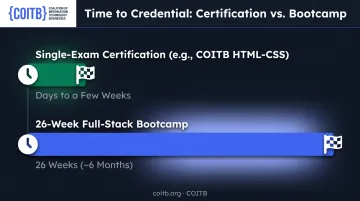
Once a credential fits your goals, timing becomes the next question. Many certificate and certification programs are built to be completed in a few weeks to a few months, depending on your pace and prior experience. A single-exam certification like COITB's HTML-CSS credential can move much faster than a 26-week full-stack bootcamp, since there's no coursework to sit through, just skills to validate.
Frequently Asked Questions
Which certification is best for web developers?
The "best" one depends on your specialization (front-end, full-stack, or AI-integrated) and your career goals. Check target job listings for the specific technologies or credentials employers actually ask for.
Is a web developer certificate worth it?
Certificates deliver the most value when paired with real portfolio projects, and they matter most for beginners and career changers without a degree. Alone, a certificate rarely closes the deal.
Is 3 months enough for web development?
Three months is enough to build foundational HTML, CSS, and JavaScript skills through many certificate programs. True job-readiness depends on how much of that time goes toward building actual projects, not just watching lessons.
What's the difference between a web design certification and a certificate?
A certificate confirms you completed coursework through a school or provider. A certification means you passed a standardized, third-party exam that independently validates your skills.
Do I need a college degree to work in web design?
No. Most web design roles don't require a degree, and employers increasingly accept bootcamps, certificates, or certifications when paired with a strong portfolio of real work.
How much do web design certifications typically cost?
Costs range from about $150 for a single exam to nearly $8,000 for full-stack bootcamp programs. COITB doesn't publish flat pricing, so contact them directly, and veterans or military spouses should confirm GI Bill, VET TEC, or MyCAA eligibility with the VA first.