Introduction
The software development job market has never been more competitive — or more specialized. The U.S. Bureau of Labor Statistics projects 15% employment growth for software developers, QA analysts, and testers from 2024 to 2034, far outpacing the national average. But that growth comes with a catch: employers are increasingly filtering for developers who can prove specialized expertise, not just general coding ability.
In 2026, general coding ability gets you in the door. What closes the offer is demonstrated, credential-backed proficiency in the specific frameworks, languages, and AI tools that development teams are actually hiring for — React, Python, JavaScript, and GPT chief among them.
This post covers the top advanced certifications for software developers in 2026 — what they require, what they cost, and how to choose the right one based on where your career is headed.
Key Takeaways
- Advanced certifications go beyond foundational coding to validate cloud architecture, DevOps, security, and enterprise-level development skills.
- Top advanced credentials for 2026 span cloud platforms (AWS, Azure, GCP), security (CSSLP), and infrastructure (RHCE) — each built on a solid foundation in languages like Python, JavaScript, and React.
- 32% of certified professionals reported a salary or wage increase after earning a certification, per Pearson VUE's 2025 candidate report.
- Every certification on this list requires prior experience or a prerequisite credential — none are beginner-level.
- Choosing the right cert depends on your specialization: cloud development, DevOps, security engineering, or backend infrastructure.
Why Advanced Certifications Matter for Software Developers in 2026
There's a meaningful difference between foundational credentials and advanced ones. Entry-level certifications confirm you understand the basics. Advanced certifications prove you can apply those skills professionally — building front-end applications, developing AI-integrated features, writing backend logic, and shipping production-ready code.
That distinction matters to employers. According to Skillsoft's 2024 IT Skills and Salary Report, over one-third of IT decision-makers estimate certified team members bring at least $25,000 in annual added value to their organizations. The same research found that 97% of IT decision-makers say certified staff add measurable value.
Roles These Certifications Help You Reach
Advanced certifications open doors to roles that sit at the intersection of development and architecture:
- Front-end developers — building responsive, interactive interfaces with React and JavaScript
- Full-stack developers — combining front-end skills with Python or MySQL backend logic
- AI-integrated developers — incorporating GPT and generative AI into real applications
- Technical sales professionals — bridging software knowledge with client-facing roles
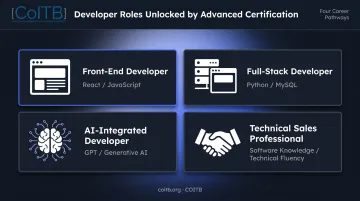
These roles reflect where hiring demand is growing. A credential that demonstrates job-ready skills in a specific technology is increasingly what separates candidates in a competitive market.
Top Advanced Certifications for Software Developers in 2026
These five certifications were selected based on industry recognition, employer demand, difficulty level, and career ROI for developers targeting senior roles.
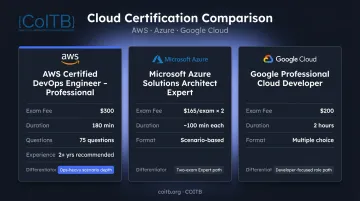
AWS Certified DevOps Engineer – Professional
AWS's professional-level developer certification is built for engineers who implement and manage continuous delivery systems on AWS. It tests CI/CD pipeline automation, infrastructure as code, monitoring and logging, and high-availability deployment strategies.
The exam requires 2+ years of hands-on AWS experience. Candidates typically hold AWS Associate-level credentials before attempting this exam.
AWS remains the dominant cloud provider globally. Gartner ranks Amazon first in the 2024 IaaS market, and the big three cloud providers together held 63% of cloud infrastructure spending in Q3 2025. That dominance means AWS skills translate across virtually every sector — from fintech and healthcare to federal contracting.
| Detail | Information |
|---|---|
| Certification Provider | Amazon Web Services (AWS) |
| Exam Code | DOP-C02 |
| Format | 75 questions, multiple choice / multiple response |
| Duration | 180 minutes |
| Estimated Cost | $300 USD |
Microsoft Certified: Azure Solutions Architect Expert
Microsoft's expert-tier credential targets professionals who design and implement solutions across Azure compute, network, storage, and security. It requires passing the AZ-104 exam (Azure Administrator Associate) before sitting the AZ-305 exam, making it a true two-stage credential.
Azure is the second-largest cloud platform and deeply embedded in enterprise environments — especially organizations running Microsoft 365, Dynamics, and hybrid on-premises infrastructure. Developers who earn this credential are positioned for architecture and technical leadership roles.
| Detail | Information |
|---|---|
| Certification Provider | Microsoft |
| Exams Required | AZ-104 (prerequisite) + AZ-305 |
| Format | Multiple choice, scenario-based, and case study questions |
| Duration | ~100 minutes exam time per exam (120 minutes seat time) |
| Estimated Cost | $165 USD per exam |
Google Professional Cloud Developer
Google Cloud's professional-level credential validates the ability to build scalable, highly available applications using Google-recommended tools and practices. Google recommends 3+ years of industry experience, including at least one year designing Google Cloud solutions.
GCP is the third major cloud platform and increasingly used for AI and data-intensive workloads. The exam guide explicitly covers cloud-native applications and AI/ML capabilities — making this credential particularly strong for developers building at the intersection of cloud and AI.
| Detail | Information |
|---|---|
| Certification Provider | Google Cloud |
| Format | Multiple choice and multiple select |
| Duration | 2 hours |
| Estimated Cost | $200 USD (plus applicable taxes) |
(ISC)² Certified Secure Software Lifecycle Professional (CSSLP)
The CSSLP is a globally recognized credential for developers who integrate security across the full software development lifecycle — covering authentication, authorization, security testing, and auditing. It requires a minimum of 4 years of paid SDLC work experience.
With NIST reporting 457,398 open U.S. cybersecurity roles and a 4.7 million global workforce shortage, demand for developers who can build secure software from the start — not patch it afterward — is accelerating. The CSSLP meets U.S. Department of Defense requirements under DoDM 8140.03, giving it strong standing in government and enterprise contracts.
| Detail | Information |
|---|---|
| Certification Provider | (ISC)² |
| Duration | Approximately 3 hours (verify current format at isc2.org) |
| Experience Required | 4 years paid SDLC work experience |
| Estimated Cost | $599 USD |
Red Hat Certified Engineer (RHCE – EX294)
The RHCE is Red Hat's advanced credential for Linux engineers who automate system administration using Ansible. It's a performance-based exam — no multiple choice, just hands-on tasks — and requires passing the RHCSA (EX200) first.
Red Hat states that more than 90% of U.S. Fortune 500 companies rely on Red Hat solutions. For backend and infrastructure developers in enterprise Linux environments, the RHCE is one of the most employer-recognized credentials available. It directly validates automation readiness and DevOps operational capability.
| Detail | Information |
|---|---|
| Certification Provider | Red Hat |
| Exam Code | EX294 |
| Format | Performance-based (hands-on) |
| Duration | Approximately 4 hours |
| Estimated Cost | Varies by region; training bundles available |
How We Chose These Advanced Certifications
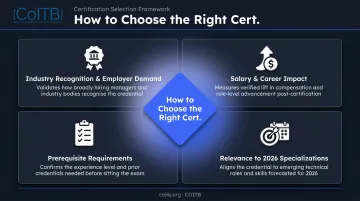
Each certification on this list was evaluated against four criteria:
- Industry recognition and employer demand — credentials that major enterprises actively screen for
- Prerequisite requirements — confirming advanced positioning (none are beginner-accessible)
- Salary and career impact — based on available market research
- Relevance to in-demand specializations in 2026 — cloud, DevOps, security, and backend infrastructure
One mistake developers often make is choosing a certification based on brand recognition alone rather than alignment to their actual career path or target employer ecosystem. An Azure Solutions Architect Expert credential carries far more weight if you're interviewing with Microsoft-stack enterprises than at a GCP-native startup.
That distinction between brand and fit is also why the structural integrity of a credential's development process matters.
The Role of Standards-Aligned Credentials
ISO/IEC 17024 is the international standard for personnel certification bodies, governing how exams are developed, how candidates are assessed, and how credentials maintain integrity over time. Credentials developed in alignment with this standard follow documented processes for psychometric review, candidate fairness, and verifiable credential issuance.
For developers building toward these advanced certifications, starting with a structured, standards-aligned credential provides a credible foundation before investing in platform-specific advanced exams. COITB's certifications — including the Professional Python Developer, JavaScript Professional Developer, and Certified GPT Professional — are designed and administered in alignment with ISO/IEC 17024 principles.
These credentials target 0–6 months of hands-on experience and validate the core programming skills that underpin cloud development, DevOps scripting, and secure software practices. They're a practical on-ramp for self-taught developers, bootcamp graduates, and career changers seeking third-party validation before investing in advanced platform exams.
Conclusion
In 2026, advanced certifications carry real weight. Hiring managers use them to filter candidates. Tech leads use them to assign high-stakes work. And developers use them to negotiate compensation from a position of proven, documented skill.
Before committing to a certification, assess carefully: Does this align with where you want to work, what platforms your target employers use, and where your hands-on experience actually sits? The right credential fits your direction — not just the one with the loudest brand recognition.
Whether you're entering the field or working toward advanced credentialing, COITB's ISO/IEC 17024-aligned certifications in application development, AI, and core web technologies offer an industry-recognized pathway. Explore credentials including the Professional Python Developer, JavaScript Professional Developer, and Certified GPT Professional at coitb.org.
Frequently Asked Questions
What certifications does a software developer need?
The right certifications depend on your specialization. Cloud-focused developers benefit from AWS or Azure credentials; security-focused developers should consider the CSSLP. Before pursuing advanced exams, foundational credentials in JavaScript, Python, or HTML/CSS — such as COITB's JavaScript Professional Developer or Professional Python Developer — validate core skills and provide a structured starting point.
What certifications can help me earn $100K a year?
AWS Certified DevOps Engineer – Professional is a well-documented six-figure credential, with Global Knowledge salary surveys citing $160K–$174K for certified AWS DevOps professionals (self-reported). Azure Solutions Architect Expert and Google Professional Cloud Developer are also linked to senior-level compensation. Use the Dice or Robert Half salary guides for current figures.
Are advanced software developer certifications worth it in 2026?
Yes — particularly in cloud, DevOps, and secure software development. Pearson VUE's 2025 report of 23,714 certified professionals found that 32% received a salary or wage increase after certification. Certification value correlates with alignment to in-demand specializations — picking a credential because it's well-known, rather than because it fits your target role, reduces that ROI significantly.
Do I need a degree to earn an advanced software developer certification?
No. Most advanced certifications require prior work experience or a prerequisite credential, not a formal degree. Self-taught developers and bootcamp graduates who have built hands-on skills and earned foundational credentials can absolutely qualify. COITB's certifications, for example, explicitly serve bootcamp graduates and self-taught developers with no degree requirement.
How long does it take to prepare for an advanced software developer certification?
Preparation time varies by credential and existing experience. Cloud architect and DevOps exams typically require 3–6 months of dedicated study on top of hands-on platform work. Candidates with strong practical backgrounds in the relevant environment often need less time than those relying primarily on study materials.