Introduction
Job roles are changing faster than degree programs can track. The World Economic Forum's Future of Jobs Report 2025 projects that 63% of employers identify skills gaps as their biggest barrier to business transformation — and that 59 out of every 100 workers will need reskilling or upskilling by 2030.
That pressure is landing squarely on working professionals. Mid-career professionals — not new graduates, not students just entering the workforce — are the ones who need to move fast and show results.
Online courses have filled that gap — but not all of them equally. A passive video series with a completion badge rarely impresses a hiring manager. What actually signals job readiness is a third-party, verifiable credential tied to a specific skill. That distinction matters more in 2026 than it ever has.
This guide breaks down which online learning categories deliver real career returns in 2026, what separates strong programs from weak ones, and how to match your goals to the right credential — not just the right content.
Key Takeaways
- AI/ML, web development, data science, and cybersecurity have the strongest hiring demand heading into 2026
- Proctored, independently verified credentials carry more weight with employers than platform completion certificates
- Execution-based assessments demonstrate job-ready skills; passive video completions don't
- Match the course to real hiring requirements in your target role before committing
Why Online Courses Are Essential for Career Advancement in 2026
The skills gap isn't a future problem. It's already here.
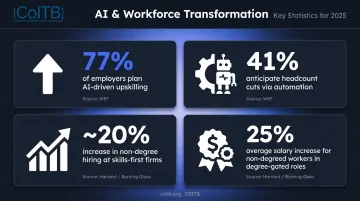
The World Economic Forum reports that 77% of employers plan to upskill their workforce in response to AI disruption, while 41% anticipate reducing headcount through automation. New roles are being created as old ones disappear — which makes standing still the riskiest career move available.
Hiring practices are shifting to match this reality. Research from Harvard Business School and Burning Glass Institute found that firms actively implementing skills-based hiring increased non-degree hiring by nearly 20%. Non-degreed workers in those firms saw an average 25% salary increase when moving into roles that previously required degrees.
Skills-based hiring is still unevenly implemented. Many employers say they value skills over credentials, but fewer than one in 700 hires actually reflects that in practice. That gap is exactly why pairing online learning with a verifiable, third-party certification matters — it gives employers the concrete evidence they want, in a format they can act on.
What the data shows:
- 77% of employers plan workforce upskilling specifically due to AI disruption (WEF)
- 41% anticipate cutting headcount through automation in parallel
- ~20% increase in non-degree hiring at skills-first firms (Harvard Business School / Burning Glass Institute)
- 25% average salary increase for non-degreed workers entering previously degree-gated roles
Best Online Courses for Career Advancement in 2026
These categories were selected based on job-market alignment, learning structure quality, credential value, and suitability for career changers and professionals looking to move up. Across the board, the best programs combine structured skill-building with assessments that test execution through real applied tasks, not passive video consumption.
AI and Machine Learning Courses
AI isn't just a technical skill anymore. According to the Indeed Hiring Lab, AI-related job postings grew 130% since February 2020, with AI terms now appearing in 45% of data and analytics postings and over 20% of software development roles. That reach across job categories is what makes AI/ML the single highest-priority skill set in 2026.
Strong AI/ML courses cover more than theory. The ones worth pursuing include hands-on labs with Python, practical prompt engineering (zero-shot, few-shot, chain-of-thought), GPT API integration, and real-world use cases in business, automation, and software development.
For self-taught professionals and career changers entering AI roles, COITB's Certified GPT Professional certification validates these competencies through a 60-question proctored exam: prompt engineering, OpenAI API integration, responsible AI practices, and applied GPT use cases. No prior AI degree or formal background is required. The credential targets anyone with 0–6 months of hands-on practice with AI tools.
| Factor | Details |
|---|---|
| Best for | Career changers entering tech, developers expanding into AI, professionals in data-adjacent roles |
| Key topics | Machine learning fundamentals, prompt engineering, GPT API usage, Python for AI, model evaluation |
| Credential pathway | Prioritize verifiable, employer-recognized certifications — not simple completion badges |
Web Development and Application Development Courses
Full-stack and front-end web development remains one of the most accessible high-paying entry points into tech. JavaScript is used by 61% of developers worldwide according to the JetBrains State of Developer Ecosystem Report 2024, and the BLS reports web developers earned a $90,930 median annual salary in 2024, with employment projected to grow 7% through 2034.
What separates a career-advancing web development course from a generic one: project-based curricula that result in a real portfolio, coverage of modern frameworks like React and Node.js, and a clear path to a credential that employers can independently verify.
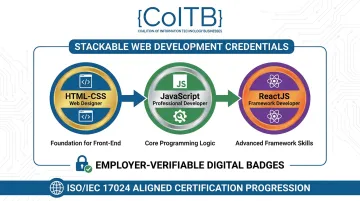
COITB offers three stackable web development credentials — HTML-CSS Web Designer, JavaScript Professional Developer, and ReactJS Framework Developer — each validated through a 90-question proctored exam. These credentials are aligned to ISO/IEC 17024 governance standards, meaning each is independently administered and employer-verifiable through a digital badge. For bootcamp graduates and self-taught developers who need a third-party credential to distinguish themselves, these certifications fill that gap directly.
| Factor | Details |
|---|---|
| Best for | Aspiring front-end and full-stack developers, bootcamp graduates, career changers with no prior experience |
| Key topics | HTML, CSS, JavaScript, React, responsive design, version control, and deployment basics |
| Credential pathway | COITB's ISO/IEC 17024-aligned credentials validate practical web development skills with employer-verifiable digital badges |
Data Science and Analytics Courses
Data literacy has become a cross-industry requirement. The BLS reports data scientists earned a $112,590 median salary in 2024, with a projected 34% employment growth through 2034 — among the fastest of any occupation tracked. Even adjacent roles show strong demand: operations research analysts are projected to grow 21% over the same period.
The key differentiator in effective data science courses: structured progression from foundational tools (Excel, SQL) through Python and visualization platforms like Tableau and Power BI, capped with a capstone project using real datasets. Platform-based certificates from Coursera or edX (such as Google Data Analytics or IBM Data Science) provide solid structured learning and are worth supplementing with independent skill assessments to validate practical capability.
Robert Half's 2026 technology salary guide notes that employers may offer a 10–20% salary lift for relevant analytics certifications. That makes the credential component of data science learning a concrete financial decision with measurable return.
| Factor | Details |
|---|---|
| Best for | Business analysts, marketers, operations professionals, and anyone moving into data-adjacent tech roles |
| Key topics | SQL, Python, data visualization (Tableau, Power BI), statistical analysis, and business reporting |
| Credential pathway | Platform certificates work well; supplement with independent assessments to validate practical capability |
Cybersecurity Courses
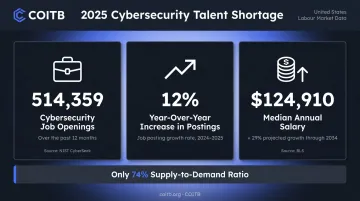
The cybersecurity talent gap is one of the most persistent in tech. NIST CyberSeek data from 2025 shows 514,359 cybersecurity job listings over a 12-month period — a 12% increase year-over-year — with a national supply-to-demand ratio of just 74%. The BLS adds that information security analysts earned a $124,910 median salary in 2024, with 29% projected employment growth through 2034.
Career-ready cybersecurity courses cover core domains: network security, vulnerability assessment, incident response, cryptography, and compliance frameworks. The strongest programs focus on exam-aligned outcomes — CompTIA Security+, CEH, or CISSP — rather than passive video content that doesn't prepare candidates for certification assessments.
| Factor | Details |
|---|---|
| Best for | IT professionals, recent grads, and career changers looking for high-demand, internationally relevant roles |
| Key topics | Network security, vulnerability assessment, cryptography, compliance frameworks, and ethical hacking basics |
| Credential pathway | CompTIA Security+, CEH, or vendor-specific certifications are widely recognized; prioritize courses built around structured exam outcomes |
UI/UX Design Courses
UI/UX design has moved well past the "creative" category. The BLS places digital interface designers at $98,090 median annual pay in 2024, with the same 7% growth projection as web development roles. Figma now holds 82.3% market share among UI design tools, making it the non-negotiable platform skill for any working designer.
Strong UI/UX courses combine portfolio-driven learning — wireframes, prototypes, full case studies — with realistic design-to-development handoff workflows. Look for programs that go beyond tool tutorials and cover user research, accessibility standards, and information architecture. On the credential side, prioritize certifications from recognized bodies that validate design thinking and technical execution together.
For professionals focused on the technical implementation side of web design, COITB's HTML-CSS Web Designer certification validates responsive layout, accessibility fundamentals (WCAG alignment), Flexbox, CSS Grid, and modern CSS3. These are the implementation competencies UX designers need when working closely with development teams.
| Factor | Details |
|---|---|
| Best for | Aspiring product designers, front-end developers expanding their skill set, professionals pivoting into digital product roles |
| Key topics | Wireframing, prototyping, user research, accessibility standards, Figma proficiency, and design-to-development handoff |
| Credential pathway | Look for certifications that validate both design thinking and technical execution — not just tool familiarity |
How to Choose the Right Online Course for Career Advancement
The most common course-selection mistakes: chasing brand names over learning quality, skipping credential pathways, and picking a format that doesn't match how you actually learn. Not all popular courses produce job-ready skills.
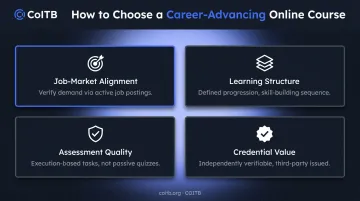
Four criteria actually predict whether a course will advance your career:
- Job-market alignment — Does the skill lead to real, current hiring demand? Check active job postings in your target role, not just industry trend articles
- Learning structure — Is there a defined progression, or is the content scattered? Courses that jump between topics without building on each other rarely produce job-ready skills
- Assessment quality — Does the course test your ability to execute, or just completion? Scenario-based questions and project reviews beat multiple-choice quizzes on memorized definitions
- Credential value — Is the resulting certification independently verifiable? A credential issued by the same organization that sold you the course is not the same as one issued by an independent credentialing body
For career changers and self-taught learners especially, courses that end in a proctored certification — where passing requires demonstrating competency under independent assessment — carry more weight with employers than platform-issued completion certificates.
The SHRM Foundation reports that 95% of executives and HR professionals say workers with skilled credentials perform the same or better than degree holders. That recognition, however, extends to credentials that can actually be verified — not self-reported course completions.
Conclusion
The best online course for career advancement in 2026 isn't determined by brand name or price. What matters: the skill it targets is one employers are actively hiring for, the format requires you to demonstrate competence, and the credential is validated by someone other than the training provider.
Before committing: map your target job's actual requirements to the course content, check whether the certification is recognized in your industry, and choose formats that require you to demonstrate skills — not just consume content.
Those criteria describe what COITB offers for IT professionals. As a non-profit credentialing body, COITB provides ISO/IEC 17024-aligned certifications across:
- AI: Certified GPT Professional
- Application development: JavaScript Professional Developer, ReactJS Framework Developer, Professional Python Developer
- UI design: HTML-CSS Web Designer
- Backend development: MySQL Backend Developer
Each credential is earned through a proctored exam and issued as a digital badge. Certifications are designed for candidates with 0–6 months of hands-on experience, making them accessible to career changers, bootcamp graduates, veterans, and self-taught developers. Visit COITB to explore available certifications.
Frequently Asked Questions
What is the best online skill to learn in 2026?
AI/ML, data analytics, and web development consistently rank as the highest-demand skills in 2026. AI-related skills offer the broadest cross-industry applicability — AI terms now appear in nearly half of all data and analytics job postings — and carry the strongest salary growth signals heading into the next few years.
What is the best career to go into in 2026?
Technology-adjacent careers — including AI development, cybersecurity, data science, and full-stack web development — offer the strongest combination of job growth, salary potential, and remote work flexibility. Cybersecurity and data science both carry projected employment growth above 29% through 2034, according to BLS data.
Do employers actually recognize online course certifications?
Not all credentials carry equal weight. Certifications aligned to ISO/IEC 17024 — the international standard for personnel credentialing — or issued by established bodies separate from training providers (such as COITB) carry substantially more weight than platform-issued completion certificates. The deciding factor is independent verifiability, not self-reporting.
How long does it take to complete an online course for career advancement?
Timelines vary by course type. Short skill-specific courses typically take 2–6 weeks, while comprehensive career-track programs range from 3–6 months. Google Career Certificates, for example, are designed for completion in under 6 months at roughly 10 hours per week.
Are online courses enough to get a job in tech without a degree?
For many entry-level roles — particularly in web development, UI/UX, and IT support — online courses combined with a project portfolio and a verifiable certification have proven sufficient. HBS and Burning Glass research shows leading employers increased non-degree hiring by nearly 20%, with those candidates earning an average 25% salary increase moving into roles that previously required degrees.
What is the difference between an online course and a professional certification?
An online course teaches skills through content and projects. A professional certification is an independently verified credential — issued by a body separate from the training provider — that confirms a candidate has met a defined competency standard through a proctored assessment, making it verifiable by employers rather than self-reported.