For career changers, bootcamp graduates, and self-taught tech enthusiasts, that creates a real problem: which certifications actually move the needle when you're applying for help desk and IT support roles?
This guide breaks down the best IT support and help desk certifications — what each credential validates, who it's built for, and what it takes to earn it.
Key Takeaways
- IT certifications signal job-readiness to employers — especially valuable for candidates without a formal degree.
- Web development credentials like ReactJS Framework Developer and HTML-CSS Web Designer are among the fastest paths into tech for career changers and self-taught developers.
- Technical Sales Specialist certification bridges the gap between non-tech sales experience and high-demand SaaS and sales engineering roles.
- COITB's exams are designed for candidates with 0–6 months of hands-on experience, making them accessible at the start of a career transition.
- Veterans and military spouses can use GI Bill, VET TEC, MyCAA, or VR&E benefits — verify eligibility with the VA or SAA before registering.
Why IT Support Certifications Matter for Your Career
A tech certification validates your skills to employers in a way a résumé bullet point simply can't. Whether you're targeting web development, AI tools, or technical sales, it gives hiring managers a standardized, verifiable signal that you can actually do the work.
Industry research shows 93% of HR leaders factor recognized certifications into hiring decisions for tech roles. Without one, your résumé has nothing objective to back it up.
That gap is especially costly for career changers and self-taught candidates competing against applicants with formal degrees. A credential closes it fast.
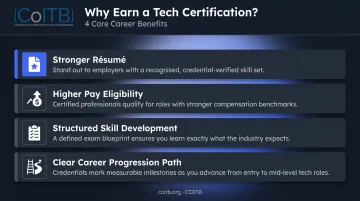
Core career benefits of earning a tech certification:
- Stronger résumé when competing against applicants with formal IT degrees
- Eligibility for roles with higher pay bands and clearer advancement tracks
- Structured skill development with defined exam objectives to guide your study
- A visible progression path from entry-level work toward specializations in development, AI, or technical sales
The credentials below are chosen for employer recognition, real-world relevance, and how quickly they can move an entry-to-mid-level candidate into a stronger position.
Best IT Support and Help Desk Certifications
These certifications were selected based on how frequently they appear in US IT support job postings, how directly they map to help desk and technical support responsibilities, and the career progression value they offer candidates at different experience levels.
CompTIA A+
CompTIA A+ is the most widely recognized entry-level IT credential and the standard baseline for help desk and technical support roles. It covers hardware, software, networking fundamentals, security, operating systems, and troubleshooting across multiple devices — with two required exams (Core 1 and Core 2) that can be taken in any order.
Its vendor-neutral design means it's applicable regardless of which employer's tech environment you walk into. CompTIA maps A+ directly to roles including help desk technician, technical support specialist, and desktop support administrator — and it appears in more tech support job listings than any other IT credential, with US employers posting 43,000 jobs seeking CompTIA A+ between March 2021 and February 2022 alone.
| Detail | Information |
|---|---|
| Exam Cost | $253 USD per exam (two exams required; verify current pricing at CompTIA's site before registering) |
| Ideal For | Career changers, bootcamp graduates, and candidates with 0–12 months of IT experience seeking their first help desk or technical support role |
| Certification Path | CompTIA Network+ or CompTIA Security+ to deepen skills or specialize |
Google IT Support Professional Certificate
Google's IT Support Professional Certificate is a self-paced, fully online program covering IT fundamentals, networking, operating systems, system administration, and security — designed for learners with zero prior experience.
It's worth clarifying what this credential is: a professional certificate (proof of course completion), not a proctored certification exam. That distinction matters. However, Google and CompTIA have formally aligned the program's content with A+ exam objectives, making it a strong preparation pathway or complementary credential. Completers also gain access to Google's Career Certificates Employer Consortium, which includes 150+ US companies such as Google, Deloitte, Verizon, and American Express.
| Detail | Information |
|---|---|
| Program Cost | $49 USD/month on Coursera after a 7-day free trial; typical completion is 3–6 months at under 10 hours per week |
| Ideal For | Complete beginners, career switchers on a tight budget, and those who want structured foundational learning before sitting a formal certification exam |
| Certification Path | Many learners pursue CompTIA A+ immediately after; Google and CompTIA support a dual-credential pathway for candidates who pass both |
ITIL 4 Foundation
ITIL 4 Foundation is the globally recognized certification for IT service management (ITSM) best practices. Where technical certifications like A+ validate troubleshooting skills, ITIL 4 Foundation validates the processes and frameworks that govern how IT support is organized and delivered.
Core exam domains include the service value system, service value chain, governance, seven guiding principles, four dimensions of service management, and continuous improvement.
This makes it distinctly valuable for candidates targeting enterprise environments, managed service providers, or organizations with formal ITSM structures. It's also a common requirement for help desk leads and service desk managers. The exam format is 40 multiple-choice questions, 60 minutes, closed book, with a 65% passing score.
| Detail | Information |
|---|---|
| Exam Cost | From $690 USD for the official PeopleCert exam bundle (training and exam voucher typically bundled; verify current pricing through an accredited training provider) |
| Ideal For | IT support professionals with some experience who want to advance into senior help desk or service desk roles, or candidates joining organizations with formal ITSM frameworks |
| Certification Path | ITIL 4 Managing Professional or ITIL 4 Strategic Leader designations for more advanced service management roles |
CompTIA Network+
CompTIA Network+ is a vendor-neutral, intermediate-level networking certification validating the ability to design, configure, manage, and troubleshoot wired and wireless networks. It covers network architecture, security, operations, and troubleshooting methodology.
For IT support professionals, networking knowledge directly expands your capability. Technicians who can independently resolve network-layer issues qualify for Tier 2 support and move naturally toward network administration and systems administrator roles. Network+ is the logical next step after A+ and builds directly on foundational support skills.
| Detail | Information |
|---|---|
| Exam Cost | $369 USD (verify current pricing at CompTIA's official site) |
| Ideal For | IT support professionals with 9–12 months of experience who want to deepen networking knowledge or move into network-focused support and administration roles |
| Certification Path | CCNA for Cisco-specific networking depth, or CompTIA Security+ to pivot toward cybersecurity |
Microsoft Certified: Azure Fundamentals (AZ-900)
Microsoft Certified: Azure Fundamentals covers core cloud computing concepts, Microsoft Azure services, security and compliance basics, and Azure pricing and support. As organizations migrate infrastructure to the cloud, even Tier 1 support professionals are increasingly expected to troubleshoot Azure-hosted services, virtual machines, and Microsoft 365 integrations.
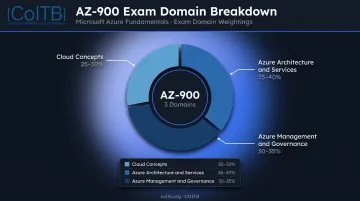
This certification directly addresses that gap. Microsoft offers free self-paced learning paths through Microsoft Learn to support exam prep, which keeps the total cost of entry low. Exam domains break down as: cloud concepts (25–30%), Azure architecture and services (35–40%), and Azure management and governance (30–35%).
| Detail | Information |
|---|---|
| Exam Cost | $99 USD (pricing varies by country/region; verify at Microsoft's official certification page) |
| Ideal For | IT support professionals in Microsoft-heavy environments or those supporting hybrid/cloud infrastructure who need foundational Azure knowledge |
| Certification Path | Microsoft Certified: Azure Administrator Associate (AZ-104) or Microsoft 365 Certified: Endpoint Administrator Associate |
CompTIA Security+
CompTIA Security+ is an intermediate-level, vendor-neutral cybersecurity certification covering threats and vulnerabilities, security architecture, security operations, and security program management and oversight — building directly on A+ and Network+ foundations.
Support professionals who hold Security+ bring cybersecurity awareness directly into the help desk — a skill set employers increasingly expect at every tier. The credential meets DoD 8140 work role requirements, making it particularly relevant for support roles in government contracting and defense environments. It's also widely listed as a preferred or required credential across security-sensitive industries.
| Detail | Information |
|---|---|
| Exam Cost | Approximately $404 USD for exam voucher SY0-701 (verify current pricing directly through CompTIA's store before registering) |
| Ideal For | IT support professionals with 1–2 years of experience, particularly those in security-sensitive environments or aiming to transition from IT support into cybersecurity |
| Certification Path | CompTIA CySA+, (ISC)² SSCP, or ISACA CISA for deeper cybersecurity specialization |
How We Chose the Best IT Support and Help Desk Certifications
Evaluation criteria:
- Frequency of appearance in US IT support and help desk job postings
- Direct relevance to actual help desk and technical support responsibilities
- Accessibility for candidates at entry, mid, and senior experience levels
- Clear career progression value beyond the credential itself
Common mistakes candidates make when choosing certifications:
- Pursuing advanced or vendor-specific certifications before building foundational skills
- Selecting credentials based on salary data rather than role alignment — a Security+ doesn't help if you're applying to jobs that list A+ as a requirement
- Choosing vendor-specific credentials without confirming the employer's tech stack (a Cisco-focused certification matters less if the target employer runs an AWS environment)
One principle drives every recommendation here: certifications that validate real-world, applicable skills outperform knowledge-only credentials in hiring. ISO/IEC 17024-aligned certifications represent a recognized international standard for competency-based credentialing — a useful benchmark when evaluating whether a credential carries weight beyond the exam itself.
With those criteria in mind, here are the certifications worth your time.
Conclusion
The best IT support and help desk certification is ultimately the one that aligns with your current experience level, target role, and the employer's technology environment. Fit matters more than name recognition.
Treat certification as a progression — not a one-time event. Start with an entry-level credential that matches where you are today, then layer in specializations as your role and responsibilities grow. The professionals who advance are those who keep adding demonstrable, verifiable skills throughout their careers.
For career changers, bootcamp graduates, and self-taught developers looking to validate real-world skills in web development, AI, or technical sales, explore COITB's ISO/IEC 17024-aligned certification programs — designed for candidates at every stage, with remote testing options and no prior experience required for entry-level credentials.
Frequently Asked Questions
What certifications should I get for tech support?
CompTIA A+ is the standard starting point for tech support roles and the credential employers most frequently list in job postings. From there, role-specific credentials like Network+ (for networking-focused environments) or ITIL 4 Foundation (for formal service desk positions) strengthen your profile. The best choice depends on your target job and the employer's technology stack.
Is CompTIA A+ enough to get a help desk job?
For many entry-level help desk and IT support roles, yes — A+ is the industry's recognized baseline and widely accepted as sufficient to get hired. Pairing it with hands-on experience through a home lab, internship, or the Google IT Support Professional Certificate makes your application more competitive when you're up against other certified candidates.
What is the easiest IT support certification to get?
The Google IT Support Professional Certificate and Microsoft Azure Fundamentals (AZ-900) are among the most accessible entry points due to lower cost, self-paced format, and no formal prerequisites. "Easiest" shouldn't be your primary selection criterion — a credential that doesn't align with your target role adds little value to your application, no matter how quickly you earned it.
How long does it take to earn an IT support certification?
Timelines vary by credential and prior experience. CompTIA A+ typically takes 2–3 months of dedicated study for beginners. The Google IT Support Professional Certificate is designed for completion in 3–6 months at under 10 hours per week. ITIL 4 Foundation can be completed in as few as 20–30 hours of focused study.
Do I need prior experience to get an IT support certification?
Most entry-level certifications — including CompTIA A+, the Google IT Support Professional Certificate, and Microsoft Azure Fundamentals — have no formal prerequisites and are designed for candidates with little or no IT background. Intermediate credentials like CompTIA Security+ recommend prior foundational knowledge, though these are guidelines rather than hard requirements.
What is the difference between a help desk certification and a general IT certification?
Help desk certifications like ITIL 4 Foundation focus specifically on service delivery processes, customer communication, and ITSM frameworks — how IT support is organized and managed. General IT certifications like CompTIA A+ cover broader technical skills applicable across multiple roles, including but not limited to help desk positions. Both types have value; the right mix depends on whether you're building technical depth or service management expertise.