Introduction
The US tech job market is polarizing fast. Roles tied to outdated skills are disappearing while demand for AI, full-stack development, and data analytics keeps climbing. The problem most professionals face isn't a lack of options; it's knowing which credentials actually move the needle on hiring and compensation.
According to Indeed's Hiring Lab, only 17.8% of US job postings required a four-year degree in January 2024, down significantly from prior years. Software development degree requirements fell 8.4 percentage points from 2019 to 2024. Employers are increasingly screening for demonstrated skills — not diplomas.
This article breaks down the five highest-impact certification tracks for IT and tech career advancement in 2026, explains what makes each one worth pursuing, and shows how earning an industry-recognized credential can directly strengthen your job prospects.
Key Takeaways
- AI/GPT, front-end, backend, and full-stack development rank among the highest-demand skill tracks in US tech hiring right now
- Skills-based hiring is accelerating: 70% of employers now use skills-based screening for entry-level roles, up from 65% the prior year
- The most career-impactful courses combine structured skill-building with a verifiable, employer-recognized credential
- ISO/IEC 17024-aligned certifications (like those from COITB) provide an independently validated benchmark — not a self-reported completion certificate
- Career changers, bootcamp graduates, self-taught learners, and veterans all have clear certification pathways into tech
Why 2026 Is a Turning Point for Career Advancement
Two forces are reshaping the US labor market simultaneously: explosive demand for tech-adjacent skills and the fastest skill turnover in recent memory.
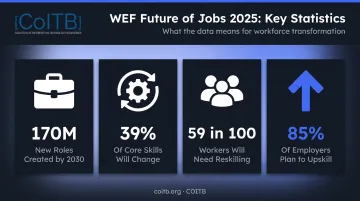
The World Economic Forum's Future of Jobs Report 2025 projects 170 million new roles created by 2030, but also flags that 39% of workers' core skills are expected to change in the same period. Nearly 59 out of every 100 workers will need reskilling or upskilling. And 85% of employers plan to upskill their workforces, with 77% focused specifically on AI-related reskilling.
The Degree Requirement Is Fading — Especially in Tech
The NACE Job Outlook 2026 survey found that 70% of employers now use skills-based hiring for entry-level roles. In software development specifically, educational requirements have dropped measurably. What replaced the degree filter? Demonstrable, verifiable skill.
This shift opens a direct path for career changers, bootcamp graduates, and self-taught developers alike. Preparing through any route and then validating skills with an industry-recognized credential can reposition a candidate — whether entering tech for the first time or moving into a higher-paying specialty. The credential is what makes the difference on a résumé.
Timing Matters
Online learning has never been more accessible. Short-term training programs, self-paced certifications, and online proctored exams mean you can upskill without pausing your current job. Getting ahead of the next hiring wave means acting now, not waiting on a two-year degree program that may not reflect what employers are actually hiring for.
Best Courses for Career Advancement in 2026
These five course tracks were selected based on US employer demand, salary growth potential, accessibility for learners at different experience levels, and the availability of a credentialing pathway — not just a completion certificate.
AI and Generative AI (GPT) Courses
Generative AI has moved from research labs into business functions across every sector. Course tracks in this area typically cover large language model usage, prompt engineering, API integration, and practical AI application in real-world workflows.
According to the Stanford AI Index and Lightcast, mentions of "generative AI" in US job postings jumped from 16,000 in 2023 to over 66,000 in 2024. Prompt engineering mentions nearly quadrupled, and AI skill demand overall rose 20% from 2023 to 2024. Even non-developer roles now require baseline AI literacy.
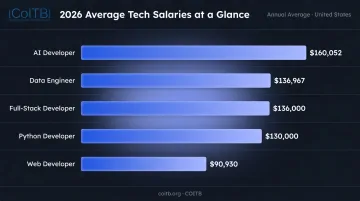
Salary benchmarks reflect that urgency. AI Developers average $160,052 annually, with AI Prompt Engineers averaging $141,770 (Glassdoor, 2026).
For those looking to validate AI skills with an employer-recognized credential, COITB's Certified GPT Professional certification validates prompt engineering, GPT API integration, responsible AI practices, and applied generative AI — through a 60-question, 75-minute proctored exam aligned to ISO/IEC 17024 standards.
| Category | Details |
|---|---|
| Key Skills | Prompt engineering, GPT API integration, AI application architecture, responsible AI, workflow automation |
| Career Roles | AI Specialist, Prompt Engineer, AI-Assisted Developer, Automation Analyst |
| Ideal For | Beginners to intermediate learners; professionals in any field adding AI fluency |
Front-End and UI Development Courses
Front-end development courses teach the visual and interactive layer of web applications — HTML, CSS, JavaScript, and modern frameworks like React. These are the technologies powering nearly every consumer-facing digital product in use today.
Web developers and digital designers are projected to grow 7% from 2024 to 2034, generating 14,500 annual openings (BLS, 2025). Median wages for web developers reached $90,930 in May 2024. React Developer roles average $121,118 annually (Glassdoor, 2026).
Front-end skills are learnable without a computer science background, making this track particularly accessible for career changers and self-taught learners who need a credential to back up their portfolio.
COITB offers two stackable front-end credentials: the HTML-CSS Web Designer certification (90 questions, 90 minutes, 75% passing score) and the ReactJS Framework Developer certification (90 questions, 90 minutes, 73% passing score). Both are available via online remote proctoring or in-person at authorized test centers.
| Category | Details |
|---|---|
| Key Skills | HTML5, CSS3, Flexbox/Grid, JavaScript, React, responsive design, accessibility fundamentals |
| Career Roles | Front-End Developer, React Developer, UI Developer, Web Designer |
| Ideal For | True beginners, career changers, self-taught learners formalizing existing skills |
Backend Development Courses
Backend development covers server-side logic, databases, and the programming languages that manage data flow. Python and SQL are the most widely adopted entry points, and the data backs that up.
Python ranked #1 on the TIOBE index in July 2025, #2 on RedMonk in January 2025, and Stack Overflow's 2025 Developer Survey reported Python adoption rose 7 percentage points year-over-year. Its versatility across backend development, data science, and AI means one course track opens multiple career paths at once.
Python Developer salaries average around $130,000 (Glassdoor, 2026), with the broader software developer category showing 15% projected growth from 2024 to 2034 and 129,200 annual openings (BLS).
COITB's Professional Python Developer (58 questions, 75 minutes) and MySQL Backend Developer (90 questions, 90 minutes) certifications together form a complete backend credential stack — validating Python OOP, file I/O, SQL querying, stored procedures, and database design.
| Category | Details |
|---|---|
| Key Skills | Python 3, MySQL/SQL querying, REST API integration, object-oriented programming, database design |
| Career Roles | Backend Developer, Python Developer, Database Administrator, API Developer |
| Ideal For | Learners with some coding exposure; front-end developers expanding to full-stack |
Full-Stack and Application Development Courses
Full-stack courses combine front-end and backend skills into a single curriculum, preparing learners to build complete applications end-to-end. For career changers who want broad employability quickly, this is the highest-ROI track.
Full-stack developers average $136,000 annually on Indeed and $118,864 on Glassdoor (2026) — meaningfully above front-end developer averages. The breadth of this track also makes learners more resilient when specific technologies shift in demand.
COITB supports a full-stack credentialing pathway through four stackable credentials, each independently proctored with a verifiable digital badge:
- HTML-CSS Web Designer
- JavaScript Professional Developer
- ReactJS Framework Developer
- MySQL Backend Developer
Together, they demonstrate capability across the complete development lifecycle, from visual layout through database management.
| Category | Details |
|---|---|
| Key Skills | HTML/CSS, JavaScript, React, Python, MySQL, API integration, responsive design, deployment basics |
| Career Roles | Full-Stack Developer, Application Developer, Software Developer, Junior Engineer |
| Ideal For | Bootcamp graduates, self-taught developers, career changers targeting software roles |
Data Analytics Courses
Data analytics courses teach professionals how to collect, interpret, and communicate data for business decisions. Core skills — SQL, Excel, and visualization tools like Tableau — don't require a CS background to learn, which makes this one of the most accessible cross-industry tracks available.
The BLS projects 34% growth for data scientists and 21% for operations research analysts from 2024 to 2034. Data Analysts average $93,382 (Glassdoor, 2026), while Data Engineers average $136,967 on Indeed.

Data skills are now required in healthcare, finance, marketing, and operations — not just at tech companies. That cross-industry demand makes this track unusually resilient to sector-specific hiring slowdowns.
Note: COITB's current portfolio focuses on AI, application development, and backend development. The MySQL Backend Developer certification validates SQL querying skills that apply directly to data analytics work.
For a dedicated analytics credential covering visualization tools like Tableau or Power BI, candidates should explore third-party programs alongside COITB's SQL-aligned credentials.
| Category | Details |
|---|---|
| Key Skills | SQL, Excel/Sheets, Tableau or Power BI, data interpretation, reporting, basic statistics |
| Career Roles | Data Analyst, Business Analyst, BI Analyst, Operations Analyst, Reporting Analyst |
| Ideal For | Non-technical professionals pivoting to data roles; analysts formalizing skills |
How to Choose the Right Course
Picking the wrong course is easier than it sounds. Many learners default to whatever's trending on social media or whatever's cheapest — without checking whether the skills are in active demand or whether the resulting credential means anything to a hiring manager.
The Three Questions to Ask First
Before choosing any course track, answer these:
- What job title am I targeting in the next 12–18 months? Don't course-shop without a role in mind.
- What skills and credentials appear in active job postings for that role? Search the title on Indeed or LinkedIn — the patterns in job descriptions will tell you exactly what to learn.
- Does the course end with an employer-recognized credential, or just a completion certificate? This distinction matters more than most learners realize.
Course Certificate vs. Certification — The Difference Is Significant
A course teaches skills. A certification is a formal credential — typically from a third-party body — that validates those skills through a proctored assessment against a defined standard.
When evaluating a certification body, look for alignment to ISO/IEC 17024 — the internationally recognized standard for personnel certification. That alignment means the credential is governed by documented exam standards, an appeals process, and ongoing competence requirements. COITB's certifications meet this standard, and resulting digital badges can be verified by recruiters on LinkedIn, submitted via credential ID to employer portals, and confirmed by background-check vendors.
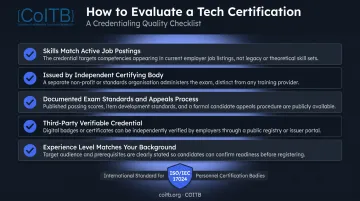
A Practical Evaluation Checklist
Before enrolling, verify:
- The skills taught match what appears in active job postings for your target role
- The credential at the end is issued by an independent body, not the course provider itself
- The certification body has documented exam standards and an appeals/complaints process
- The credential can be independently verified by a third party (recruiter, employer, background check)
- The experience level required matches where you are today
Conclusion
Career advancement in 2026 comes down to specificity. The best course isn't the most popular one on a platform's homepage — it's the one that closes the exact gap between where you are today and the role you're targeting in the next year.
Identify your target job title. Check what skills and credentials appear in real postings for that role. Choose a course track that teaches those skills — then validate them with a credential that employers can actually verify.
For IT professionals, web developers, and AI practitioners making that move, COITB's ISO/IEC 17024-aligned certification programs cover the full development stack:
- ReactJS Framework Developer and JavaScript Professional Developer — application development
- HTML-CSS Web Designer — UI and interface design
- Certified GPT Professional — AI and generative AI
- Professional Python Developer and MySQL Backend Developer — backend development
All exams are available online via remote proctoring or in-person at authorized test centers, with verifiable digital badges issued on passing.
Not sure where to start? Take a free practice assessment at coitb.org/assessment to gauge your readiness, or visit coitb.org to explore the full certification catalog.
Frequently Asked Questions
What courses should I take in 2026?
The strongest tracks for US tech career growth right now are AI/GPT, front-end web development (HTML, CSS, React), backend development (Python, SQL), and data analytics. The right choice depends on your target job role — start there and work backward to the skills required.
What are the highest-paying certifications for 2026?
In tech, AI/machine learning and full-stack development certifications consistently correlate with the highest salaries. AI Developers average $160,052 and Full-Stack Developers average $136,000 annually (Glassdoor/Indeed, 2026). Data engineering roles average $136,967 on Indeed. Data engineering roles average $136,967 on Indeed. COITB offers credentials directly in these tracks — including Certified GPT Professional, ReactJS Framework Developer, and Professional Python Developer.
How do I choose the right course for career advancement?
Start with a specific job title you're targeting. Pull 10–15 active job postings for that role and note which skills and credentials appear most frequently. Then find a course that teaches those skills and ends with an independently verified credential — not just a completion certificate.
Are online certifications recognized by employers in 2026?
Employer recognition depends on the certifying body. Credentials aligned to ISO/IEC 17024 standards — which require independent governance, proctored assessments, and documented competence requirements — carry more weight than generic completion certificates. Check whether the credential appears in real job postings to confirm employer relevance.
What is the difference between a course and a certification?
A course delivers instruction; a certification is an independent assessment issued by a third-party body that validates whether you actually learned the skills. The strongest career outcomes come from combining both: structured learning followed by a proctored, employer-verifiable credential.
How long does it take to complete a tech certification in 2026?
Most entry-level tech course tracks take between 3 and 12 months depending on prior experience and weekly time commitment. COITB's individual certification exams are 75–90 minutes, with candidates typically recommended to have 0–6 months of hands-on experience before sitting. Self-paced and online options allow upskilling without leaving a current job.