The demand is real. BLS projections show software developer employment growing 15.8% and data scientist roles growing 33.5% between 2022 and 2026, with information security analysts not far behind at 12%. Supply isn't keeping up, which gives certified candidates genuine leverage.
This article covers the five certification categories that pay best in 2026 — web development, cloud computing, cybersecurity, data analytics, and AI — what makes each valuable, and how to choose the right one based on your goals.
Key Takeaways
- Web development, AI, and Python certifications offer strong salary-to-time ratios heading into 2026
- Most high-paying certs take 3–6 months to earn and cost far less than a degree
- Third-party credentials aligned to ISO/IEC 17024 carry more weight with employers than self-reported skills
- Front-end and AI roles show consistent entry-level salary premiums for certified candidates
- Pairing a Python or GPT certification with web development skills builds the strongest market profile
Why Tech Certifications Pay Off in 2026
A tech certification isn't a course completion badge. It validates a specific, measurable skill set against a defined industry standard, so employers can evaluate candidates on demonstrated ability rather than degree history or job title.
That shift is accelerating fast. According to SHRM's 2025 Skills-First Movement survey, 87% of U.S. HR professionals encountered applicants presenting skill-based credentials — sometimes, often, or almost always. CompTIA's IT Industry Outlook 2025 separately confirms that many companies are actively dropping degree requirements from job postings.
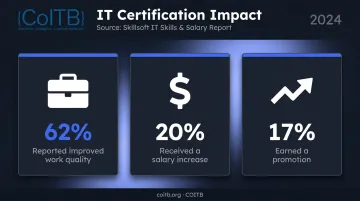
The career payoff follows. The Skillsoft IT Skills and Salary Report shows certification drives measurable outcomes:
- 62% of respondents said certification improved the quality of their work
- 20% received a raise directly as a result
- 17% earned a promotion
Not all certifications carry equal weight, though. Look for credentials aligned to recognized standards — ISO/IEC 17024 is the international benchmark for personnel certification bodies. Compliant bodies must maintain defined competency frameworks, standardized scoring, and independent examination oversight — meaning the credential reflects actual skill, not just course completion.
Top Tech Certifications That Pay Well in 2026
These five categories were selected based on median salary potential, employer recognition, time to completion, and alignment with real U.S. job postings in 2026.
Web Development Certifications (HTML, CSS, JavaScript, React)
Front-end and full-stack roles are among the most consistently posted jobs in the U.S. tech market. HTML, CSS, JavaScript, and React form the core skill stack — and unlike many tech paths, these certifications can be earned without a CS degree. Employers can directly test web dev skills through code assessments, making validated credentials especially credible.
COITB, a non-profit credentialing body, offers ISO/IEC 17024-aligned certifications in HTML-CSS Web Design, JavaScript, and ReactJS — designed for bootcamp graduates, self-taught developers, and career changers who want a third-party credential employers can independently verify.
Exam specifics at a glance:
- 90-minute, scenario-based exams structured across competency domains
- Digital badge awarded on passing — shareable on LinkedIn and résumés
- Online-proctored from any location with a webcam and stable internet
- In-person testing available at authorized COITB test centers
| Factor | Details |
|---|---|
| Average Salary Range | $84,960 median (BLS); ~$91,000 average per Glassdoor |
| Typical Time to Earn | 1–4 months depending on experience |
| Exam Cost Range | Varies by credential; contact COITB at support@coitb.org for current pricing |
Web dev credentials also ladder naturally — HTML/CSS → JavaScript → ReactJS — making them an ideal starting point for anyone entering tech.
MySQL & Backend Development Certifications
Backend database skills are among the most sought-after competencies in application development — and MySQL remains the world's most widely deployed open-source relational database. Developers who can design schemas, write complex queries, and manage backend data structures are competitive candidates for full-stack, backend, and data-adjacent roles alike.
COITB's MySQL Backend Developer certification validates practical database skills for candidates with 0–6 months of hands-on experience. It's built for developers who've learned SQL through self-study, bootcamps, or on-the-job exposure and want an independent credential to substantiate those skills.
The credential pairs naturally with COITB's web development certifications — HTML/CSS and JavaScript cover the front end; MySQL covers the data layer behind it.
| Factor | Details |
|---|---|
| Average Salary Range | $85,000–$110,000 for backend/full-stack developer roles (industry aggregates) |
| Typical Time to Earn | 4–8 weeks depending on prior SQL exposure |
| Exam Cost Range | Contact COITB at support@coitb.org for current pricing |
Technical Sales Certifications
Tech sales is one of the fastest career transitions available to professionals from non-tech backgrounds — and one of the most financially rewarding paths that doesn't require writing a single line of code. Sales engineers, solutions consultants, and technical account executives routinely earn base salaries of $80,000–$110,000, with OTE (on-target earnings) well above that range.
The catch: employers want proof that candidates understand the products they're selling. A credential that validates technical fluency closes that gap.
COITB's Technical Sales Specialist certification targets career changers from industries like medical device, B2B industrial, financial services, and telecom who want to pivot into SaaS sales or pre-sales engineering. It covers the technical vocabulary, product evaluation frameworks, and solution-positioning skills employers expect in client-facing technical roles.
- No coding prerequisites required
- Targets professionals with existing sales experience transitioning into tech
- Validates competency employers can't easily assess through a resume alone
| Factor | Details |
|---|---|
| Average Salary Range | $80,000–$130,000+ OTE for technical sales and solutions engineering roles |
| Typical Time to Earn | 3–6 weeks for candidates with existing sales backgrounds |
| Exam Cost Range | Contact COITB at support@coitb.org for current pricing |
Data Analytics Certifications (Google Data Analytics, Microsoft Power BI PL-300)
Data-driven decision-making has made analytics skills non-negotiable across finance, healthcare, marketing, logistics, and tech. SQL, spreadsheet proficiency, and visualization tools like Power BI and Tableau are the core stack — and neither of the top entry-level credentials requires a degree.
- Google Data Analytics Certificate (Coursera) — self-paced, portfolio-building, widely recognized by employers for entry-level analyst roles
- Microsoft Power BI PL-300 — respected by enterprise employers; renews annually via a free online assessment
Together, they create a well-rounded analyst profile without significant upfront cost.
| Factor | Details |
|---|---|
| Average Salary Range | $60,000–$85,000 for entry-level data analyst roles (industry aggregates) |
| Typical Time to Earn | Google DA Certificate: 3–6 months self-paced; PL-300: 4–8 weeks with experience |
| Exam Cost Range | Google DA Certificate: ~$49/month (Coursera); PL-300: ~$165 USD |
AI & GPT Certifications
AI skills have become a hard requirement across industries in 2026 — not just in tech. Employers across industries are actively seeking professionals who can work with AI tools, design prompt workflows, and integrate AI APIs into real applications — no machine learning PhD required.
LinkedIn's Skills-Based Hiring 2025 report found that a skills-based approach expands the AI talent pool by a median of 7.3-fold in the U.S. — meaning candidates with certified AI skills can access far more opportunities than those without credentials.
That opportunity is exactly what COITB's Certified GPT Professional certification addresses. It covers prompt engineering (zero-shot, few-shot, chain-of-thought), OpenAI API integration in Python and JavaScript, responsible AI practices, and applied GPT workflows — structured across five competency domains, 60 questions, 75 minutes, with a 71% passing score.
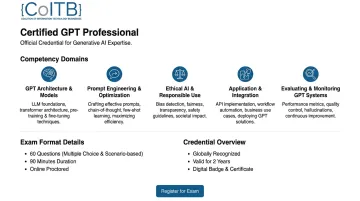
It's built for professionals without deep ML backgrounds: developers, analysts, educators, and career changers with 0–6 months of hands-on AI experience.
Python is the dominant language underpinning most AI workflows. COITB's Professional Python Developer certification pairs naturally with the GPT credential — covering OOP, file I/O, APIs, and exception handling in 58 questions at 75 minutes. The combination signals to employers that you can both design and build AI-powered solutions.
| Factor | Details |
|---|---|
| Average Salary Range | $85,000–$130,000+ for AI-adjacent roles (prompt engineer, AI specialist, ML support) |
| Typical Time to Earn | 4–8 weeks for foundational AI/GPT credentials |
| Exam Cost Range | Contact COITB at support@coitb.org for current GPT Professional pricing |
How to Choose the Right Tech Certification for Your Goals
Start With Job Postings
Check current listings in your target role and metro area. If a certification appears across dozens of postings, that's the clearest signal of employer recognition. Trending doesn't always mean valuable. Job postings are the most reliable reality check you have.
Match Your Skill Baseline
Think in terms of laddering up:
- No tech background? Start with HTML/CSS, Google Data Analytics, or AWS Cloud Practitioner
- Some hands-on experience? Skip introductory tiers and go straight to role-specific certs in cybersecurity, AI, or data
- Existing PM credential? Stack technical certifications (React, Python, GPT) on top of your PMP or PSM rather than replacing it
Evaluate Total Cost of Ownership
The exam fee is one line item. Factor in:
- Study materials and prep resources
- Renewal costs and continuing education requirements
- How frequently the credential expires (typically every 3 years for most certs)
Some certs require paid recertification every cycle; others renew via free assessments. That difference can add hundreds of dollars to the total cost over a five-year career window — worth calculating before you commit.
Check Credentialing Standards
ISO/IEC 17024 is the international standard for personnel certification bodies. Credentials aligned to it must meet defined requirements:
- Competency frameworks tied to actual job functions
- Standardized, independently scored examinations
- Strict separation between training providers and exam delivery
- Impartiality safeguards against conflicts of interest
Employers recognize this distinction because it means the credential was earned through an objective process — not a proprietary pass/fail system the certifying body controls entirely.
How We Selected These Certifications
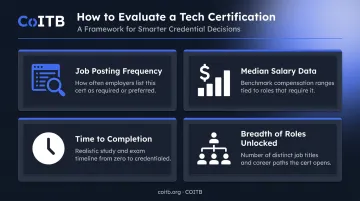
These five categories were chosen based on four criteria:
- Job posting frequency — how often the certification appears in real employer listings
- Median salary data — from BLS and industry labor market sources
- Time-to-completion benchmarks — prioritizing credentials achievable within 3–6 months
- Breadth of roles unlocked — credentials that open multiple job titles, not just one
That criteria narrows the field. Knowing what disqualifies a cert is just as useful. Common mistakes to avoid:
- Choosing a cert based on cost alone
- Picking a vendor-specific credential without checking which platforms your target employers use
- Selecting a program from an unaccredited or unrecognized body — ISO/IEC 17024 alignment signals the credentialing body has been independently vetted against international standards, which is what employers recognize
Conclusion
In 2026, the five certification categories that deliver the best combination of salary potential and time investment are web development, cloud computing, cybersecurity, data analytics, and AI. The right credential, backed by a recognized credentialing body, can deliver real career mobility without a four-year degree.
Assess your current skill base, check actual job postings in your target field, and prioritize certifications that are employer-recognized, regularly updated, and aligned to a credible standard. One example of a body meeting that bar is COITB.
COITB is a non-profit credentialing organization offering ISO/IEC 17024-aligned certifications in HTML-CSS Web Design, JavaScript, ReactJS, Python, MySQL, GPT, and Technical Sales. All exams are remote-proctored with flexible scheduling — military CAC and VA-issued IDs accepted.
Veterans may be eligible for GI Bill, VET TEC, or VR&E funding (verify eligibility with VA/SAA before registering). Explore COITB's certification catalog at coitb.org/auth/signup or contact the team at support@coitb.org.
Frequently Asked Questions
What is the quickest certification to get?
Foundational credentials — including entry-level web development and cloud certifications — are among the fastest to earn, typically requiring 2 to 6 weeks of focused study. They're practical first steps for anyone who wants to enter tech without a lengthy prep timeline.
What can I learn in 3 months to get a job online?
Front-end web development (HTML, CSS, JavaScript), cloud fundamentals, or data analytics can all be learned and certified within 3 months. These skills map directly to remote-friendly entry-level roles like junior front-end developer, cloud support specialist, or junior data analyst.
What tech certifications pay the most in 2026?
Cybersecurity certifications — especially CompTIA Security+ — and cloud credentials like AWS Solutions Architect consistently command the highest salaries. BLS data puts the median annual wage for information security analysts at $124,910, making it one of the strongest entry points in tech.
Do I need a degree to get a tech certification?
Most entry-level tech certifications have no degree prerequisites. They're designed to validate demonstrated skills, making them accessible to self-taught developers, bootcamp graduates, and career changers regardless of educational background.
Are vendor-neutral certifications better than vendor-specific ones?
Vendor-neutral certs (CompTIA, ISC², ISTQB) offer broad employer recognition across companies regardless of tech stack. Vendor-specific certs (AWS, Azure, Salesforce) signal deep platform expertise. The best choice depends entirely on which platforms your target employers actually use.
How do I know if a tech certification is credible?
Look for three signals: the credential appears in real job postings, the credentialing body aligns to a recognized standard like ISO/IEC 17024, and the curriculum is updated regularly. If a cert checks all three, it carries genuine weight with employers.