That demand has fueled a boom in Python certifications. But not all of them serve the same purpose, and many candidates waste money chasing the wrong credential.
A Python certification is a third-party validation that you can actually write functional code — not just talk about it. People pursue one for three reasons: proving skills without a CS degree, strengthening a thin résumé, or backing up a career pivot into tech. This guide breaks down certification levels, the top options for 2026, real ROI data, and how to pick the right path for your goals.
Key Takeaways
- Python certifications span entry-level (PCEP) through professional (PCPP1/PCPP2), plus newer non-profit alternatives like COITB's Professional Python Developer Certification
- Certifications work best as proof points alongside a portfolio, not replacements for one
- Costs run from under $70 for entry-level exams to $325+ for professional-level ones
- COITB's Professional Python Developer Certification targets the 0-6 month experience range with remote-proctored exams
- The right certification depends on your current skill level and target job, not prestige alone
Levels & Types of Python Certifications Explained
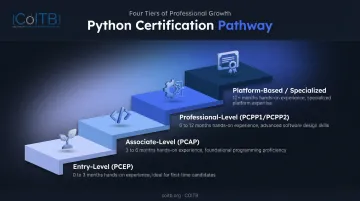
Python certifications generally follow a four-tier structure: entry-level, associate-level, professional-level, and specialized/platform-based tracks. Each tier assumes a different starting point.
Entry-Level Certifications
The PCEP (Certified Entry-Level Python Programmer) from the Python Institute requires zero prerequisites. It tests basic syntax, data types, and control flow — the stuff you'd learn in your first month of coding.
- 30 questions, 40-minute exam
- 70% passing score
- From $69 for the exam alone ($95 bundled with retake and practice test) according to the Python Institute
It's designed for people who've never taken a coding exam before. Think of it as a driver's permit, not a license.
Associate-Level Certifications
The PCAP (Certified Associate Python Programmer) steps things up significantly. It covers object-oriented programming, modules, and error handling — concepts you need actual coding hours to grasp, not just memorize.
- 40 questions, 65-minute exam
- Listed from $295 for the exam alone
- No formal prerequisite, though PCEP knowledge is recommended
This one suits developers who've written real code for a few months and want to formalize their OOP knowledge before applying to junior developer roles.
Professional-Level Certifications
PCPP1 and PCPP2 target advanced practitioners. PCPP1 covers design patterns, networking, and database integration, with pricing listed from $325. PCPP2 builds further on that foundation but remains listed as in development on the Python Institute's own site as of mid-2026 — worth checking before you commit money to it.
Both recommend PCAP as prior knowledge, even without a hard enforcement requirement.
Platform-Based & Role-Specific Certifications
A newer category has emerged that skips pure language theory in favor of applied skills. Google's IT Automation with Python Professional Certificate on Coursera, for example, is a course-completion credential (not a proctored exam) that runs about six months at 10 hours per week for $49/month after a free trial.
Non-profit credentialing bodies take a different approach, favoring shorter, proctored skills exams over multi-month coursework. COITB's Professional Python Developer Certification, for example, is ISO/IEC 17024-aligned and built for candidates with 0-6 months of hands-on experience. This makes it a practical option for career changers, bootcamp grads, and self-taught developers who lack years of professional history to lean on.
The exam format reflects that shorter runway:
- 58-90 multiple-choice and scenario-based questions
- 75-90 minute time limit
- 70-75% passing score
- Online proctored (webcam + stable internet) or in-person at authorized test centers
- Digital badge issued on passing, shareable on LinkedIn or a résumé
Top Python Certifications to Pursue in 2026
Here's how the major options stack up side by side:
| Certification | Level | Approx. Cost | Prerequisites | Best For |
|---|---|---|---|---|
| PCEP | Entry | From $69 | None | Complete beginners |
| PCAP | Associate | From $295 | None (PCEP recommended) | Junior developers, 3-6 months coding |
| PCPP1 | Professional | From $325 | None (PCAP recommended) | Experienced developers |
| PCPP2 | Professional | Listed from $295, still in development | PCAP + PCPP1 recommended | Advanced (verify active status first) |
| Google IT Automation | Applied/Platform | $49/month, ~6 months | Basic IT familiarity | IT ops, automation-focused roles |
| COITB Professional Python Developer | Foundational-Mid | Contact for pricing | None; 0-6 months experience recommended | Career changers, bootcamp grads, veterans |
One option on that list is worth a closer look, especially for candidates without years of coding behind them.
COITB's Python Certification, Explained
COITB's Professional Python Developer Certification stands out for its accessibility. The exam runs 58 multiple-choice and scenario-based items over 75 minutes, with a 70% passing score required.
It covers:
- Python syntax, OOP, and data structures
- File handling and exception handling
- Standard library usage and automation scripting
Candidates can test via online remote proctoring (available 24/7, webcam and stable internet required) or at an authorized COITB test center. Pass, and you get a digital badge built for LinkedIn and résumé display, verifiable through COITB's public registry. There's no physical certificate to mail and no weeks-long wait; the badge is ready as soon as you pass.
The certification specifically targets people with 0-6 months of hands-on Python experience gained through bootcamps, self-study, coursework, or on-the-job exposure. That's a lower bar than PCAP typically expects.
It gives bootcamp graduates and self-taught developers something concrete for their résumé now, rather than waiting a year to accumulate freelance work.
The AI-Adjacent Skills Shift
AI integration is reshaping what "Python skills" even means. HackerRank's 2025 survey of nearly 14,000 developers found that 97% of developers now use at least one AI coding assistant, with AI generating an average of 29% of developer code (rising to 48% among heavy users).
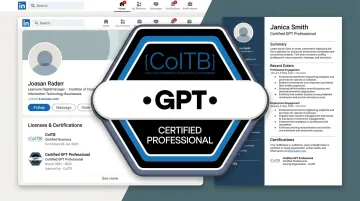
That shift is pushing certification bodies to add AI-adjacent skills, such as GPT integration, alongside their core Python offerings. COITB's separate Certified GPT Professional credential reflects this exact trend: pairing traditional Python competency with generative AI application skills.
A Certification Bites the Dust
Not every credential survives. Microsoft retired its entire MTA certification line, including "Introduction to Programming Using Python," back in June 2022. If you earned it before then, it's still valid on your transcript — but you can no longer pursue it fresh. The lesson: verify a certification's active status before investing time and money.
Are Python Certifications Worth It in 2026?
This is the question everyone actually wants answered, and the honest answer is: it depends on where you're starting from.
The data we have isn't perfectly Python-specific, but it's directionally useful. Pearson VUE's Value of IT Certification Report, cited by the Python Institute, found that 28% of general IT certification holders reported a salary increase after certifying, and 61% of those hoping for promotion actually got one. The same report found 66% of hiring managers said candidates with an IT certification were more likely to land an interview.
None of that isolates Python certifications specifically, and no major 2025/2026 survey — including Stack Overflow's — breaks out certified versus non-certified developer salaries. So treat certifications as directional evidence, not guaranteed income.
Certifications as Tiebreakers, Not Golden Tickets
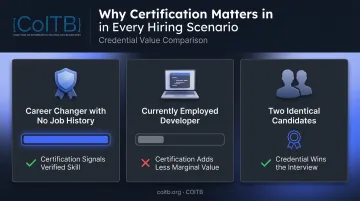
Here's the practical reality: certifications rarely replace experience. What they do is act as a tiebreaker when you're up against another candidate with a similar background but no proof of skills on paper.
- If you're transitioning careers with no coding job history, a certification adds credibility a bare résumé can't
- If you're already employed as a developer, a certification matters less than your shipped projects
- If two candidates look identical on paper, the one with a verifiable credential often gets the first interview
This is exactly the entry-to-mid-level gap COITB's Professional Python Developer Certification is built to fill — designed for candidates with 0-6 months of hands-on experience, including career changers and self-taught developers who need a credential to back up their skills.
Portfolio vs. Certification: Why Not Both?
The GitHub-portfolio crowd has a fair point: a working project proves more than a multiple-choice exam ever could. But this framing misses the actual best strategy.
Combine both. A certification signals structured knowledge; a portfolio proves you can build something real with it. Recruiters scanning résumés in seconds respond to both signals — one gets you noticed, the other gets you hired.
ROI by Tier
- Entry-level (e.g., PCEP): Low cost, high value for beginners with no track record. Best ROI-to-dollar ratio.
- Associate-level (e.g., PCAP): Moderate cost, solid value if you're targeting junior developer roles and want OOP validation.
- Professional-level (e.g., PCPP1/2): High cost, niche value. Only worth it if you're already deep into Python and need credentialing for advanced roles, like architecture or systems design.
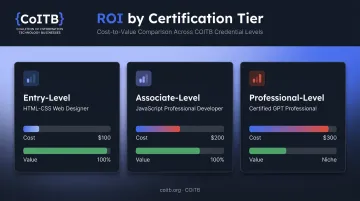
COITB's Professional Python Developer Certification sits at the entry-to-mid tier of this spectrum, aimed at candidates with 0-6 months of experience rather than seasoned architects.
How to Choose the Right Python Certification for Your Goals
Don't pick based on brand recognition alone. Match the certification to where you're headed:
- Define your target role first — data science, web development, AI-adjacent, or general backend work each point toward different paths
- Match difficulty to your actual skill level — an entry-level exam wastes money if you're already writing production code; a professional-level exam wastes money if you fail it from being underprepared
- Check the issuing body's recognition — ISO/IEC 17024-aligned credentials carry more weight with hiring managers than obscure or discontinued programs. COITB's Professional Python Developer Certification, for instance, follows this alignment and targets candidates with 0-6 months of hands-on experience
Use this quick gut-check to place yourself:
| Your Current Skill Level | Recommended Starting Point |
|---|---|
| Can't confidently explain OOP concepts in an interview | Entry-level certification |
| Building small apps independently | Associate or applied-level credential |
| Writing production code at work | Professional-level credential |
Matching the tier to where you actually stand avoids wasted exam fees and underprepared attempts.
How to Prepare and Register for Your Exam
Preparation should come before you ever create an account. Get comfortable with:
- Python syntax and control flow (loops, conditionals, functions)
- Object-oriented programming basics — classes, methods, inheritance
- Real coding exercises, not just reading tutorials
The Registration Process
Most certifying bodies, including COITB, follow a similar sequence:
- Review the official exam outline and objectives
- Study independently or through bootcamp/coursework resources
- Create an account with the certifying body (COITB's signup is at coitb.org/auth/signup)
- Complete a system test if testing online (webcam check, workspace photos, ID verification)
- Schedule your exam — remote proctoring is often available 24/7, while in-person testing centers offer scheduled slots
- Pass with the required score and claim your digital badge
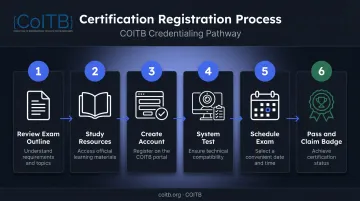
For COITB's Python exam specifically, remote proctoring requires a webcam, minimum 1 Mbps internet connection, a private well-lit workspace, and valid photo ID — military CAC or VA-issued ID is accepted, a detail worth knowing if you're transitioning from service. Books, extra monitors, and phones must be cleared from the testing area before starting.
Passing the system check confirms your setup works, but it says nothing about whether you know the material. Before registering, try a free practice assessment if the provider offers one (COITB's is at coitb.org/assessment). It tells you honestly whether you're ready or need another month of study.
Combine structured learning with practice questions, and build one or two small projects alongside your studying. A calculator app or a simple API script does more for your retention than another round of flashcards.
Frequently Asked Questions
How much does a Python programming certification exam cost?
Entry-level exams like the PCEP start around $69, while professional-level exams like PCPP1 run from $325. Platform-based and non-profit options vary, so check directly with the provider for current pricing.
Is there a Python programming certification exam?
Yes, several exist across different skill levels. The Python Institute offers PCEP, PCAP, PCPP1, and PCPP2, while platform providers and non-profits offer their own applied-skills alternatives.
Which Python programming certification is best?
It depends entirely on your experience level and goals. Beginners should start with PCEP or an accessible entry-level option like COITB's Python certification, while those with a few months of coding experience should consider PCAP.
Is the PCAP exam worth it?
PCAP is genuinely useful for validating intermediate OOP knowledge, especially paired with real projects on GitHub. It's not required for most jobs, but it strengthens a résumé during a competitive job search.
Do I need prior coding experience before pursuing a Python certification?
No. Entry-level certifications like the PCEP and COITB's Professional Python Developer Certification have no formal prerequisites and are built for complete beginners and career changers.
How long does it take to prepare for a Python certification exam?
Entry-level exams typically need a few weeks of focused study for beginners. Professional-level certifications can take several months, depending on your existing coding experience.