Introduction
Full stack developers are among the most sought-after professionals in tech right now. According to Indeed, the average full stack developer salary in the US sits at $136,050 — with a range stretching from $83,943 to $220,502 based on 14,000 salary observations updated July 2026. Over 12,000 active job listings appear on Indeed for this role alone.
The challenge isn't demand — it's selection. Dozens of courses exist, ranging from free self-paced curricula to paid bootcamps costing thousands. Choosing the wrong one doesn't just waste money; it costs months of momentum and can leave you underprepared for real hiring environments.
That selection problem is exactly what this guide addresses. Below you'll find the five best full stack developer courses of 2026, evaluated on curriculum depth, job-readiness, cost, and support — plus guidance on matching each program to your current skill level and career goals.
Key Takeaways
- The Odin Project is the top free option for disciplined self-starters who want real-environment, professional-grade training
- Full Stack Open suits learners with JavaScript basics ready to work with TypeScript, Docker, and CI/CD pipelines
- FreeCodeCamp offers the lowest barrier to entry with a free, structured, project-based curriculum
- IBM Full Stack Certificate on Coursera provides structured cloud and DevOps coverage with an employer-recognized credential
- Udemy's Angela Yu Bootcamp offers the most comprehensive paid beginner curriculum with lifetime access at a consistently discounted price
What Is Full Stack Development and Why It Matters in 2026
A full stack developer is fluent in both frontend technologies — HTML, CSS, JavaScript, React — and backend systems like Node.js, Python, databases, and APIs. That means one developer who can build and deploy a complete web application without needing separate specialists — a capability that commands a premium. Companies, particularly startups and mid-size tech firms, prefer developers who can own features end-to-end.
The Bureau of Labor Statistics projects 7% growth for the web developer and digital designer category from 2024 to 2034, with approximately 14,500 annual openings — and full stack roles sit at the higher-paid end of that category.
The AI Shift That Changes Junior Expectations
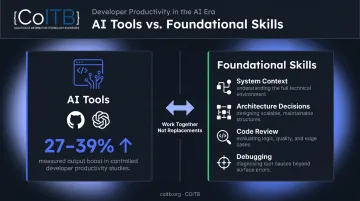
One factor reshaping demand in 2026: AI handles boilerplate. Tools like GitHub Copilot and ChatGPT accelerate code generation, but they also raise the bar for what employers expect from junior developers.
GitHub's research shows junior developers may gain 27–39% in output from AI assistance. Even so, foundational knowledge, system context, and code review capability remain non-negotiable.
Employers still expect developers to understand why an architecture decision works — not just generate code that runs. That deeper comprehension is what separates candidates who can use AI productively from those who are dependent on it.
Best Full Stack Developer Courses in 2026
These five courses were selected based on curriculum depth, technology currency, cost-to-value ratio, community reputation, and career relevance. Each one suits a different type of learner — so where you start depends on your experience level, budget, and how much structure you need.
The Odin Project
The Odin Project is a free, open-source curriculum with one of the strongest reputations in self-taught developer communities. It offers two paths — Full Stack JavaScript (Node.js) and Ruby on Rails — with the JavaScript track being the dominant choice in 2026. Its curriculum repository has earned 12,765 GitHub stars and 16,505 forks, a reliable signal of community trust.
Unlike browser-based platforms, The Odin Project requires learners to configure real development environments from day one — Linux/WSL, Git via command line, local editors. Projects are intentionally open-ended, with no step-by-step instructions telling you what to build. You make your own architectural decisions.
That ambiguity is the point. Graduates arrive in hiring environments already comfortable with the uncertainty of real projects — and that comfort is hard to teach any other way.
The curriculum also covers Test-Driven Development and mirrors professional workflows in a way most courses don't attempt.
| Detail | Info |
|---|---|
| Price | Free |
| Duration | Self-paced (typically 12–18 months) |
| Best For | Disciplined self-starters wanting rigorous, real-environment training |
Full Stack Open (University of Helsinki)
Full Stack Open is a free, university-grade course from the University of Helsinki. It is not designed for absolute beginners — foundational JavaScript knowledge is assumed. More than 10,000 students have completed at least one Full Stack course through the program since 2019.
This course refuses to teach legacy tools. The curriculum covers:
- Vite and Vitest for modern build and testing workflows
- React Query and TypeScript (treated as mandatory, not optional)
- Docker and GitHub Actions CI/CD pipelines
- The full testing pyramid and production deployment
The gap between "building features" and "shipping production applications" is where most junior developers struggle. Full Stack Open targets that gap directly. Graduates who finish the TypeScript, containers, and CI/CD modules often arrive at mid-level capability.
| Detail | Info |
|---|---|
| Price | Free |
| Duration | Self-paced (approximately 6–12 months) |
| Best For | Learners with JavaScript basics who want a modern, production-relevant curriculum |
FreeCodeCamp
FreeCodeCamp is a non-profit platform and the most common entry point into software development for self-taught learners worldwide. Its September 2025 curriculum update shifted from isolated syntax exercises to building complete applications, requiring 1,800 hours to reach the Full Stack Developer capstone.
The updated curriculum spans six core tracks:
- Responsive Web Design
- JavaScript and Front End Libraries
- Back End Development and Relational Databases
- Python (acknowledging that pure frontend-only roles are increasingly rare)
Learners earn certificates by completing project milestones that pass automated test suites. That's a meaningful distinction: you demonstrate practical ability, not just course completion.
The platform has issued over 300,000 legacy certifications, and individual certifications can be completed in 3–6 months.
| Detail | Info |
|---|---|
| Price | Free |
| Duration | Self-paced (full curriculum ~1,800 hours; individual certs in 3–6 months) |
| Best For | Absolute beginners exploring full stack at zero cost |
IBM Full Stack Software Developer Professional Certificate (Coursera)
The IBM Full Stack Software Developer Professional Certificate on Coursera is a structured, industry-recognized program with 284,004 enrolled learners and a 4.6/5 rating from 60,394 reviews as of July 2026. It is one of the most widely referenced credentials in full stack hiring pipelines.
The course delivers a complete MERN stack foundation in one linear curriculum: HTML, CSS, JavaScript, React, Node.js, Express, MongoDB, Git, APIs, and deployment. Dr. Yu's teaching style is widely praised for making complex concepts approachable without oversimplifying them.
One honest limitation worth noting: the course lacks TypeScript coverage and in-depth local development environment setup. After finishing it, pair the learning with active Git practice and independent portfolio project building. One-time purchase pricing applies; contact Udemy for current promotional rates.
| Detail | Info |
|---|---|
| Price | One-time purchase (frequent promotions available) |
| Duration | Self-paced (most learners complete in 3–6 months) |
| Best For | Beginners wanting an affordable, guided A-to-Z curriculum with lifetime access |
How to Choose the Right Full Stack Developer Course
The most common mistake: choosing based on brand name or price rather than matching the course format to your actual learning style and experience level. A highly-rated paid course used inconsistently will produce worse outcomes than a free rigorous one used consistently.
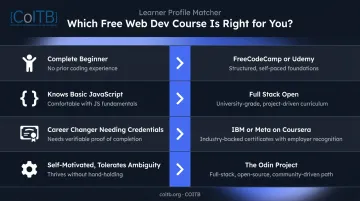
Match Your Profile to the Right Course
| Your Situation | Best Starting Point |
|---|---|
| Complete beginner, no coding experience | FreeCodeCamp or Udemy (build confidence first) |
| Know basic JavaScript already | Full Stack Open (skip the basics, go deep) |
| Career changer needing employer credentials | IBM or Meta certificates on Coursera |
| Self-motivated, tolerates ambiguity | The Odin Project (strongest job-readiness signal) |
What a Credible 2026 Full Stack Curriculum Must Cover
Before committing to any course, check for these non-negotiables:
- TypeScript — or an explicit explanation of why it's excluded
- Git and version control — introduced from day one, not as an afterthought
- Deployment and basic cloud concepts — not just localhost development
- At least one testing approach — unit, integration, or end-to-end
- Local development environment — browser-only platforms don't prepare you for real workflows
The Credential Gap: What Comes After the Course
Employers increasingly look at GitHub portfolios and third-party credentials alongside course certificates — a certificate of completion only proves you finished, not that you can perform.
COITB is a non-profit credentialing body that validates skills across the core full stack technology stack — HTML/CSS, JavaScript, React, Python, and MySQL — through proctored exams aligned to ISO/IEC 17024 standards. These are independently verified credentials issued by an organization separate from any training provider.
The recommended sequence for full stack graduates covers exactly what these courses teach:
- HTML-CSS Web Designer — covers semantic HTML5, CSS3, Flexbox, Grid, and responsive design
- JavaScript Professional Developer — confirms ES6+, async/await, DOM manipulation, and REST API integration
- ReactJS Framework Developer — tests components, Hooks, React Router, and state management
- MySQL Backend Developer — covers schema design, SQL querying, and back-end data operations
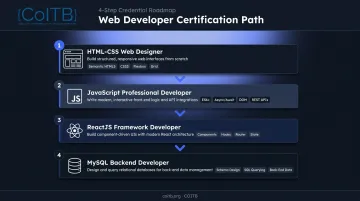
Each passed exam issues a digital badge with a verification URL that hiring managers can confirm directly from LinkedIn or a résumé. Exams are available online, remote-proctored from home. A free practice assessment is available at coitb.org/assessment to gauge readiness before registering.
Frequently Asked Questions
What is the best full stack developer course for complete beginners in 2026?
FreeCodeCamp and Udemy's Complete Bootcamp are the most beginner-friendly options : both require no prerequisites and progress through structured, project-based learning. After building foundational confidence, beginners should transition to a local development environment to prepare for real work environments.
How long does it take to become a full stack developer with an online course?
Most structured programs take 6–12 months at consistent study. Total time to job-readiness depends heavily on how much time you invest building and deploying real projects alongside the curriculum — the curriculum alone isn't enough.
Are free full stack development courses worth it, or should I pay for one?
Free courses like The Odin Project and Full Stack Open can produce fully job-ready developers. Paid courses may offer more structure or recognized credentials.
What technologies should a full stack developer course cover in 2026?
Core stack: HTML, CSS, JavaScript, React (frontend), Node.js or Python (backend), SQL or MongoDB (databases), and Git. TypeScript and testing coverage differentiate strong programs from outdated ones — treat their absence as a warning sign.
Do I need a certification to get a full stack developer job?
Certifications aren't required but help pass automated resume filters and signal structured learning. What matters most to employers is a GitHub portfolio of deployed, real-world projects , ideally paired with a third-party, independently verifiable credential.
Is a full stack developer a good career in 2026?
Yes — demand remains strong. Indeed reports an average full stack developer salary of $136,050 in the US, compared to $125,036 for frontend and $160,784 for backend roles.
Conclusion
There is no single best full stack developer course. The right choice depends on where you're starting, how you learn, and what outcome you're optimizing for. Free options like The Odin Project and Full Stack Open can produce job-ready developers as effectively as paid programs — discipline matters more than tuition.
Pick one course, commit fully, and prioritize building and deploying real projects over collecting multiple certificates. Once you've built that foundation, a third-party credential gives employers something concrete to verify — especially if you're self-taught or coming from a bootcamp.
COITB's stackable certifications in HTML-CSS, JavaScript, React, MySQL, and Python are recognized credentials that hold up in hiring pipelines in ways course completion certificates typically don't. Contact COITB at support@coitb.org or +1 877 402 0840 to learn more.