The challenge isn't deciding whether to get certified. It's knowing which certifications actually move your career forward in 2026 — and which ones sound impressive but don't appear in the job postings for your target role.
This guide breaks down the most in-demand tech certifications by domain, who they're best for, and what the associated roles pay — so you can make a smarter decision about where to invest your time and money.
Key Takeaways
- AI/ML and application development certifications are the most in-demand categories heading into 2026
- 91% of employers believe IT certifications play a key role in hiring decisions
- Entry-level professionals can start with foundational certs and build toward specializations through structured pathways
- Application development certifications — JavaScript, React, Python — are growing fast and require no prior degree
- The right certification depends on your target role, experience level, and budget — prioritize credentials that validate real, job-ready skills employers can verify
Why Tech Certifications Are Worth It in 2026
The shift toward skills-first hiring is real. According to CompTIA, 91% of employers believe IT certifications play a key role in hiring and reliably indicate a successful employee. Skillsoft reports that more than one-third of IT decision-makers peg the value of a certified employee at $25,000+ in annual added value to their organizations.
Three concrete reasons certifications pay off:
- Give hiring managers a verifiable way to screen applicants quickly, especially for technical roles where self-reported skills are hard to validate
- Satisfy hard credential requirements in government, defense, and healthcare roles — these aren't preferences, they're gatekeepers
- Provide career changers and self-taught professionals with a defined learning path and a recognized starting credential
The sections below cover the most in-demand certifications across web development, AI, backend, and technical sales — organized so you can zero in on the domain that fits your next move.
Best In-Demand Tech Certifications for 2026
These certifications were selected based on employer demand, salary impact data, and alignment with the fastest-growing areas of enterprise tech spending.
AI & Machine Learning Certifications
Demand for AI-skilled professionals has outpaced supply. The Google Professional Machine Learning Engineer certification is increasingly listed as a requirement or strong preference for AI engineering, MLOps, and GenAI roles — validating the ability to build, deploy, and manage ML systems in production environments.
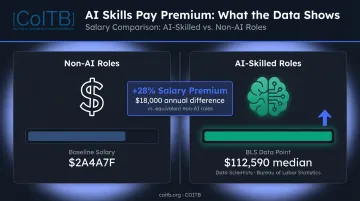
What sets AI certifications apart: they signal both technical fluency and applied AI literacy. According to Lightcast, job postings that include AI skills offer salaries 28% higher — nearly $18,000 more annually — than comparable non-AI roles. The BLS reports a median annual wage of $112,590 for data scientists (May 2024), with the highest earners exceeding $194,000.
Important note: The Microsoft Azure AI Engineer Associate (AI-102) retired on June 30, 2026. Candidates should focus on currently active credentials.
| Details | |
|---|---|
| Key Certification | Google Professional Machine Learning Engineer |
| Exam Cost | $200 + applicable tax |
| Best For | Software developers and data professionals moving into AI engineering or GenAI-focused roles |
Cloud Computing Certifications
Cloud platforms power the infrastructure behind modern enterprise software — and employers know it. AWS, Azure, and Google Cloud certifications are among the most requested credentials by employers — and among the most reliable drivers of salary increases.
Cloud certifications command premium pay because they sit closest to revenue-critical infrastructure. Many enterprise roles now treat AWS or Azure credentials as baseline screening criteria rather than differentiators. Glassdoor estimates average U.S. salaries of $176,594 for AWS Solutions Architects and $231,035 for Azure Architects (2026 estimates, subject to change with new submissions).
| Details | |
|---|---|
| Key Certifications | AWS Certified Solutions Architect – Associate; Microsoft Certified: Azure Solutions Architect Expert; Google Cloud Professional Cloud Architect |
| Exam Costs | AWS: $150 | Azure (AZ-305): ~$165 USD | Google Cloud: $200 + tax |
| Best For | IT professionals and system administrators ready to specialize in cloud architecture and infrastructure |
Cybersecurity Certifications
The cybersecurity workforce gap is substantial. ISC2 estimated a 4.8 million worker shortfall against a 5.5 million active workforce in 2024 — leaving nearly half of demand unmet. That gap translates directly into hiring urgency and strong salary floors across the field.
Two tiers dominate this space:
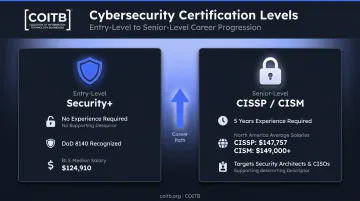
- Entry-level (Security+): No prior experience required. Covers foundational risk management and threat mitigation. Recognized within DoD 8140 Cyber Workforce Qualification work roles including cyber defense analyst and incident responder. BLS median for information security analysts: $124,910 (May 2024)
- Senior-level (CISSP/CISM): CISSP requires five years of professional experience and is typical for security architects, directors, and CISOs. CISSP holders report a global average salary of $119,577, rising to $147,757 in North America. CISM holders report an average above $149,000 annually
| Details | |
|---|---|
| Key Certifications | CompTIA Security+; CISSP; CISM |
| Exam Costs | Security+: Check CompTIA.org for current pricing | CISSP: $749 USD | CISM: $575 (member) / $760 (non-member) |
| Best For | Security+ for IT professionals transitioning into cybersecurity; CISSP/CISM for experienced professionals targeting leadership roles |
Application Development & Web Technology Certifications
Certified developers in JavaScript, Python, React, and related technologies are in consistent demand. These certifications validate hands-on coding ability — which is why hiring managers treat them as reliable signals of job-readiness, particularly for candidates without a traditional CS degree.
The BLS reports a median annual wage of $90,930 for web developers (May 2024). Python adoption rose 7 percentage points in the 2025 Stack Overflow Developer Survey, reflecting continued growth in employer interest.
COITB (College of IT Business) offers ISO/IEC 17024-aligned certifications in these technologies — including HTML/CSS, JavaScript, React, Python, MySQL, and GPT. Exams are delivered remotely via online proctoring or in person at authorized test centers, with no prior degree required.
Each passing candidate receives a verifiable digital badge for LinkedIn, résumés, and employer verification portals.
COITB also maps its credentials to structured career pathways:
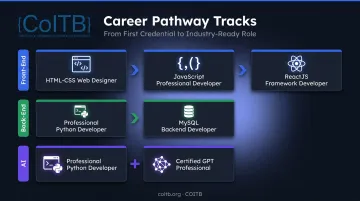
- Front-end track: HTML-CSS Web Designer → JavaScript → ReactJS Framework Developer
- Back-end track: Professional Python Developer → MySQL Backend Developer
- AI track: Certified GPT Professional + Professional Python Developer
| Details | |
|---|---|
| Key Certifications | COITB ReactJS Framework Developer; COITB HTML-CSS Web Designer; COITB JavaScript Professional Developer; COITB Professional Python Developer; COITB MySQL Backend Developer; COITB Certified GPT Professional |
| Exam Cost | Contact COITB at support@coitb.org or +1 877 402 0840 for current pricing; free practice assessment at coitb.org/assessment |
| Best For | Bootcamp graduates, self-taught developers, career changers, and veterans seeking validated credentials in web and application development |
Foundational IT Certifications
For complete beginners, two credentials stand above the rest as starting points:
- CompTIA A+ — The most employer-recognized credential for IT support roles. No degree required; accessible with a few months of self-study. BLS median for computer user support specialists: $60,340 (May 2024). A+ leads naturally to Security+ and cloud credentials
- Cisco CCNA — The gold standard entry-level networking certification. BLS median for computer network support specialists: $73,340 (May 2024). CCNA opens doors to CCNP and advanced networking roles
A deliberate sequence like A+ → Security+ → AWS or CCNA → CCNP tells a coherent career story to employers — and signals intentional growth, not just credential collecting.
| Details | |
|---|---|
| Key Certifications | CompTIA A+; Cisco CCNA |
| Exam Costs | A+: Check CompTIA.org for current per-exam pricing (Core 1 + Core 2 required) | CCNA: $300 USD |
| Best For | Complete beginners, career switchers, and anyone building foundational IT skills before specializing |
How to Choose the Right Tech Certification for 2026
Two mistakes derail most candidates before they even sit an exam:
- Chasing prestigious but misaligned credentials — A CISSP sounds impressive, but it's useless if you have no security experience and it doesn't appear in postings for your target role
- Skipping foundational certs — Jumping to advanced credentials without prerequisite knowledge wastes money and leaves skill gaps that surface in interviews
Avoiding both mistakes comes down to evaluating four things before you register for anything.
Four Factors to Evaluate
- Role alignment — Pull 20 job postings for your target role and note which certifications appear most often. That list is your shortlist
- Industry requirements — Some credentials are sector-specific. Security+ matters more in defense; AWS matters more in SaaS
- Total cost — Budget for exam fees, study materials, and potential retakes, plus any renewal costs
- Recertification timeline — Most credentials expire in 2–3 years and require continuing education or re-examination to stay valid
Think in Pathways, Not Individual Credentials
Credential sequences signal intentional career direction to employers. A path like Python → MySQL → Certified GPT Professional shows you understand how backend skills build on each other — not just that you collected badges. It also makes the learning curve more manageable, since each credential reinforces what came before.
Conclusion
The best tech certification for 2026 is the one that aligns with your current skills, your target role, and where employer demand is actually strongest. Cross-reference your shortlist against real job postings before committing time and money.
Certifications work best alongside hands-on experience and real-world projects. Credentials validate what you know. They don't replace building real projects. Professionals who combine verified credentials with a portfolio consistently stand out over those relying on either alone.
For those targeting application development, AI, or web technology, COITB offers ISO/IEC 17024-aligned certifications in the skills today's tech employers are actively hiring for — including JavaScript, React, Python, MySQL, and GPT. Exams are available via remote online testing with no prior degree required. Explore COITB's certification programs at coitb.org or take the free practice assessment at coitb.org/assessment to find the right starting point.
Frequently Asked Questions
Which tech certifications are most in-demand?
AI/ML, cloud (AWS, Azure, Google Cloud), cybersecurity (Security+, CISSP), and application development certifications dominate 2026 hiring demand — these categories align directly with where enterprise hiring budgets are concentrated.
Which IT cert pays the most?
CISSP holders in North America average $147,757 annually. AWS Certified Solutions Architects average $155,597 in North America per Skillsoft's salary survey. Senior certified professionals in these areas routinely earn well into six figures.
Are tech certifications worth it in 2026?
According to recent employer surveys, 91% of hiring managers say certifications play a key role in hiring decisions, and more than a third value certified employees at $25,000+ in annual organizational value. In cloud, cybersecurity, AI, and application development, credentials consistently determine which candidates make the shortlist.
How long does it take to earn a tech certification?
Entry-level certifications typically take 3–6 months of part-time study. Advanced credentials like CISSP require five years of professional experience plus months of dedicated exam prep. Application development certifications — such as COITB's JavaScript, ReactJS, or Python credentials — are designed for candidates with 0–6 months of hands-on experience.
What tech certifications are best for complete beginners?
For web and software roles, COITB's HTML/CSS Web Designer, JavaScript Professional, and Python Developer certifications are built specifically for beginners — no prior degree or years of experience required. For AI roles, the Certified GPT Professional credential offers a structured entry point into generative AI work. All are skills-based credentials open to anyone who can pass the exam.
Do I need a college degree to get a tech certification?
No. Most tech certifications have no degree requirement — they're skills-based credentials open to anyone who can pass the exam. That makes them an effective pathway for career changers, bootcamp graduates, self-taught developers, and veterans transitioning into civilian tech roles.